Xiaomi Built a Phone with a Mechanical Zoom Lens. It Costs $1,799 and Weighs 218 Grams.
By OFOKI TECH | August 16, 2026
Xiaomi charges $1,799 for a phone that weighs 218 grams and carries a camera module the size of a matchbox. The question is not whether you need it. The question is whether anyone else can build it for less.
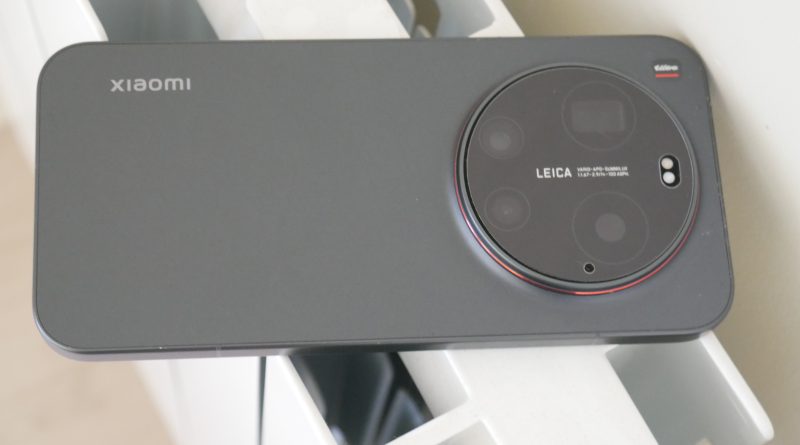
The Xiaomi 17 Ultra went on sale globally in March 2026, five months after its Chinese debut. It is not a subtle device. At 162.9 millimeters tall and 77.6 millimeters wide, it is larger than the iPhone 17 Pro Max and heavier than the Samsung Galaxy S26 Ultra. The camera bump on the back houses a mechanical zoom system with three groups of lenses that physically move to change focal length between 75 and 100 millimeters. No other mainstream smartphone manufacturer has shipped this. Xiaomi did, and it paired the mechanism with a 200-megapixel sensor.
The Chip: Snapdragon 8 Elite Gen 5 on TSMC N3P
The heart of the device is the Snapdragon 8 Elite Gen 5, manufactured by TSMC on its N3P node. The octa-core CPU tops out at 4.6 GHz and is paired with an Adreno 840 GPU and a Hexagon co-processor for AI workloads. Xiaomi pairs this with 16 GB of LPDDR5X RAM and UFS 4.1 storage in 512 GB or 1 TB configurations.
This is not a chip that struggles. In daily use, the limiting factor is thermal dissipation, not processing power. Xiaomi addresses this with what it calls the Xiaomi Guardian Structure, a combination of a high-strength aluminum alloy frame, a composite fiberglass back, and Xiaomi Shield Glass 3.0 on the front, which the company claims improves drop resistance by 30 percent over the previous generation. The device is rated IP68 and IP69, meaning it can survive high-pressure water jets and immersion up to six meters for 30 minutes.
The display is a 6.9-inch LTPO AMOLED panel with a resolution of 1200 by 2608 pixels, a 120 Hz adaptive refresh rate, and a peak brightness of 3,500 nits. It supports Dolby Vision, HDR10+, and uses 2160 Hz PWM dimming to reduce eye strain at low brightness. The screen-to-body ratio is roughly 92.3 percent.
The Camera: A 200-Megapixel Telephoto with Mechanical Zoom
The headline feature is the camera system, developed in partnership with Leica. Xiaomi and Leica upgraded their collaboration in December 2025 to what they call a « Strategic Co-creation Model, » meaning Leica engineers were involved from the product’s inception rather than simply tuning image processing after the hardware was finalized.
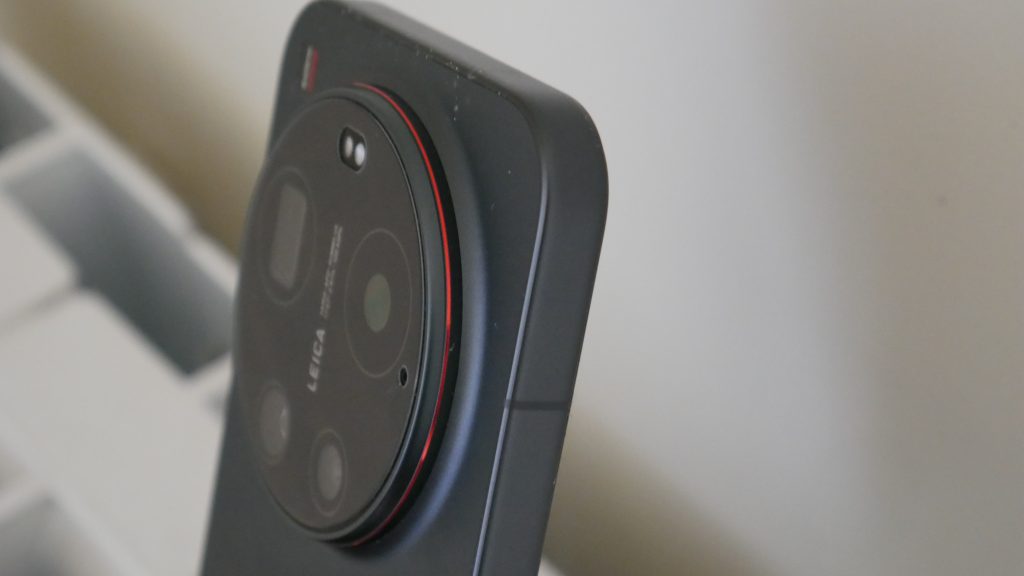
The primary camera uses a 50-megapixel OmniVision OVX10500 sensor, marketed by Xiaomi as the Light Fusion 1050L. It is a 1-inch type sensor with a 23-millimeter equivalent focal length, an f/1.67 aperture, optical image stabilization, and multi-directional phase-detect autofocus. The pixel size is 1.6 microns natively, binned to 3.2 microns in low light. This is the same sensor size category Sony uses in its Xperia Pro line and that Xiaomi itself used in the 15 Ultra, though the specific sensor has changed from Sony to OmniVision for this generation.
The ultrawide camera is a 50-megapixel Samsung ISOCELL JN5 with a 14-millimeter equivalent focal length, an f/2.2 aperture, and a 115-degree field of view. It can focus as close as 5 centimeters for macro work.
The telephoto is where the engineering becomes unusual. It uses a 200-megapixel Samsung ISOCELL HPE sensor at 1/1.4-inch, larger than most primary sensors on competing phones. The lens system covers a 75 to 100 millimeter equivalent focal length using what Xiaomi describes as a mechanical optical zoom. Three groups of lenses physically move inside the barrel to change magnification without digital cropping. The aperture adjusts from f/2.39 at 75 millimeters to f/2.96 at 100 millimeters. The system also supports optical-quality zoom up to 400 millimeters through a combination of sensor cropping and lens positioning.
This is not a periscope design in the traditional sense. It is a continuous zoom mechanism, more akin to the zoom lenses found on compact cameras than the fixed focal length periscopes common on smartphones. The tradeoff is size: the camera module is significantly larger than those on the iPhone 17 Pro Max or the Samsung Galaxy S26 Ultra. The benefit is image quality at intermediate focal lengths. At 85 or 90 millimeters, where most phones rely entirely on digital zoom, the Xiaomi 17 Ultra is still using optical elements.
The front camera has been upgraded to a 50-megapixel OmniVision OV50M sensor with autofocus, a 21-millimeter equivalent focal length, and an f/2.2 aperture. This is a notable improvement over the 32-megapixel fixed-focus sensors Xiaomi used previously.
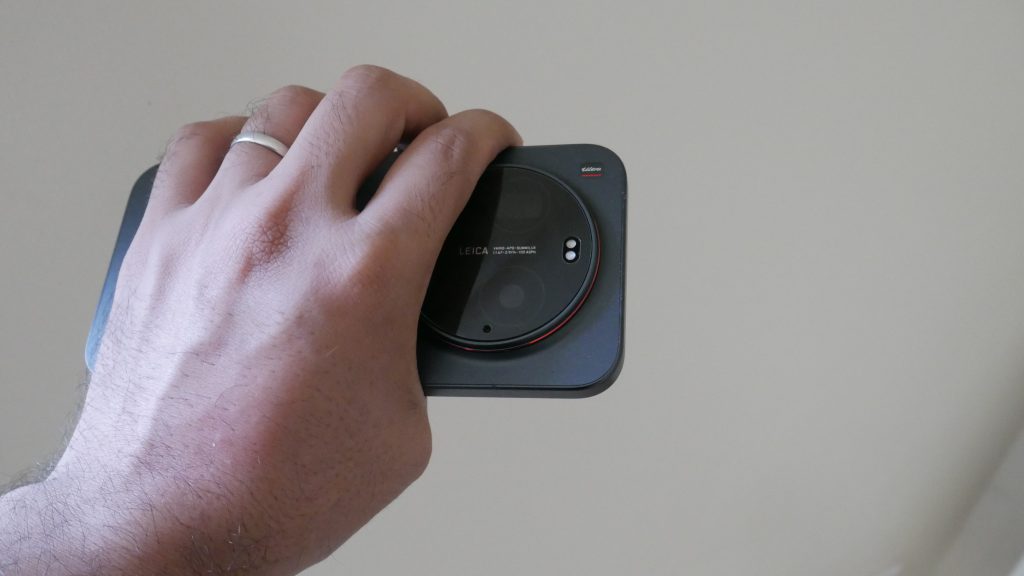
Image Quality: What the Tests Say
DXOMARK tested the Xiaomi 17 Ultra and awarded it an overall camera score of 166. The photo sub-score was 170, and the video sub-score was 157. For context, the Huawei Pura 80 Ultra scored 184 overall, the Oppo Find X9 Ultra scored 185, and the Apple iPhone 17 Pro scored 186. The Xiaomi 17 Ultra sits in the upper tier but does not top the rankings.
DXOMARK praised the telephoto zoom performance, the color rendering, and the texture-noise tradeoff in daylight. It noted weaknesses in low-light video, occasional focus decision errors, and contrast inaccuracies in exposure rendering. The video score of 157 places it behind the iPhone 17 Pro’s 172, with DXOMARK noting stepping in autofocus transitions and occasional loss of face tracking during sudden lighting changes.
The Leica tuning manifests in two preset photographic styles: Leica Authentic Look and Leica Vibrant Look. The Authentic Look prioritizes natural color reproduction and restrained contrast. The Vibrant Look increases saturation and punch. Both are available across all three rear cameras.
Battery and Charging: The Global Compromise
The Chinese version of the Xiaomi 17 Ultra ships with a 6,800 mAh battery. The global version, due to regulatory and shipping constraints, is capped at 6,000 mAh. Both versions support 90-watt wired charging. Xiaomi claims the Surge Battery technology uses 16 percent silicone content for improved energy density and longevity.
The display uses full-brightness DC dimming by default, switching to PWM only when adaptive refresh rate is enabled. The device supports wet touch technology, meaning the screen remains responsive with water on the surface.
The Leica Version and the Price
In China, Xiaomi sells a second variant called the Xiaomi 17 Ultra by Leica. It features a dual-tone leather back, a knurled metal frame engraved with « LEICA CAMERA GERMANY, » and a rotating mechanical ring around the camera island with 20 ball bearings for tactile focus adjustment. This version also includes exclusive Leica M9 and Leica M3 film simulation modes, and a dedicated security chip for CAI Photo Authenticity Protection, which digitally signs photos to prove they are not AI-generated.

The global market gets the standard version. It is available in Black, White, and Starlit Green. The 512 GB model costs $1,799. The 1 TB model costs $1,999. A separate Leica Leitzphone variant, distributed by Leica itself in select markets, costs $2,299 and includes the Photography Kit Pro.
At $1,799, the Xiaomi 17 Ultra undercuts the iPhone 17 Pro Max and the Samsung Galaxy S26 Ultra in most configurations. It offers more RAM, a larger battery, and a more complex camera system than either. What it does not offer is the software ecosystem. The phone runs HyperOS based on Android 16, with Xiaomi’s app store and services framework. In markets where Google services are available, they are pre-installed. In markets where they are not, users sideload.
Sources and further reading