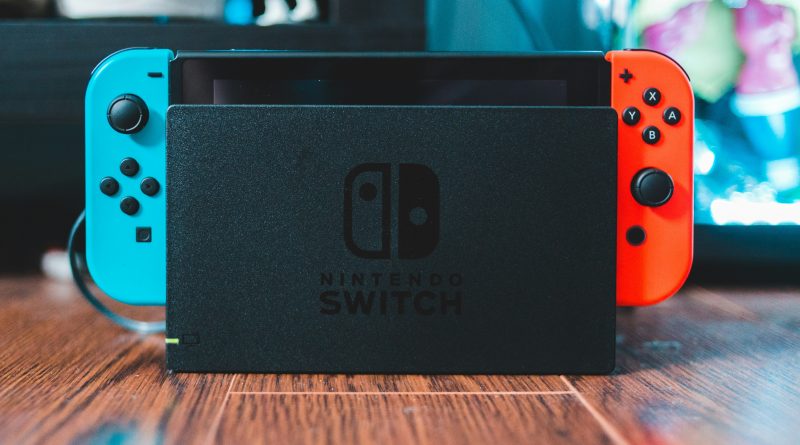
Nintendo Switch 2: 23.68 Million Units, a GameCube Lifetime Erased in 13 Months, and the $499 Question
By OFOKI TECH | August 27, 2026
Nintendo published its first-quarter fiscal 2027 earnings on August 6, 2026, and the document contains two numbers that sit uncomfortably next to each other. The Switch 2 has shipped 23.68 million units worldwide since its June 5, 2025 launch. That total surpasses the GameCube’s entire lifetime run of 21.74 million units. It is also paired with a forecast cut: Nintendo expects to sell 16.5 million Switch 2 units this fiscal year, down from 19.86 million in year one. A console that just buried a five-year generation in thirteen months is now preparing for a price hike and a demand contraction. The story is not the sales figure itself. It is what happens when record momentum collides with a component market that no longer obeys the rules of console economics.
The Numbers That Matter: 23.68 Million and Counting
The 23.68 million figure covers sales through June 30, 2026. In the April–June quarter alone, Nintendo moved 3.82 million Switch 2 hardware units. Software sales for the platform reached 58.17 million units in the same period, with titles like Yoshi and the Mysterious Book (May) and Star Fox (June) performing steadily alongside back-catalogue momentum from Pokémon Pokopia. Nintendo’s official investor relations filing puts the original Switch at 156.59 million lifetime units, a figure the Switch 2 is not yet chasing but is outpacing on a per-quarter basis at the equivalent life stage.
The operating profit figure is equally telling: 142.5 billion yen, up 150.5% year-over-year, driven by software margins and a refund of IEEPA tariffs recorded as prior-period cost of sales. Nintendo is making more money per console than it did a year ago, even as the hardware itself becomes more expensive to build.
The GameCube Shadow: A Lifetime Erased in One Fiscal Year
The GameCube spent roughly five years on shelves and finished at 21.74 million units worldwide. Nintendo Life noted that the Switch 2 cleared that entire lifetime figure in about thirteen months, a comparison that says less about the GameCube’s quality and more about how much larger the console market, and Nintendo’s returning customer base, has become since 2001. The GameCube was competing directly against Sony’s PS2 for shelf space in a smaller market. The Switch 2 is selling into an installed base of Switch owners already comfortable with the ecosystem.
Symbolically, the milestone matters. Practically, it is a footnote. The GameCube was not a commercial failure because it lacked good games. It was a commercial failure because it lacked the market size Nintendo now commands. The Switch 2’s success is built on that expansion, not on hardware superiority.
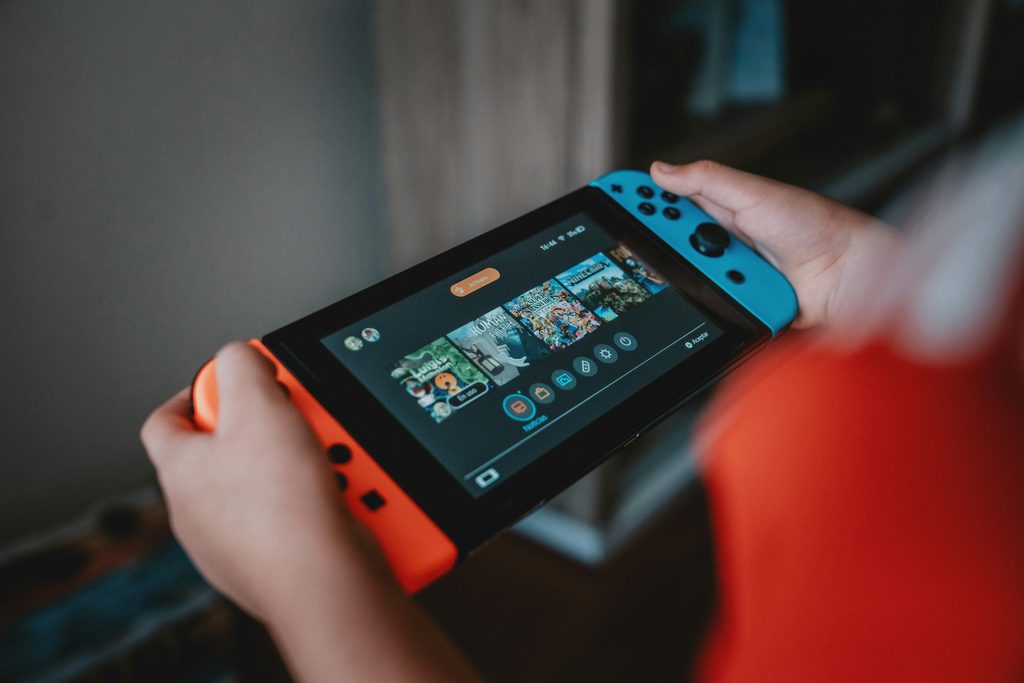
The Digital Shift: 90% and What It Means for Margins
Nintendo reported 132.7 billion yen in digital sales for its dedicated game platforms in Q1, up 90.0% year-over-year. The driver was an increase in downloadable versions of packaged software. That shift matters because digital sales carry higher margins: no manufacturing, no distribution, no retail cut. A 90% jump in digital revenue means Nintendo is capturing more profit per game even as total net sales declined 9.5% year-over-year to 517.8 billion yen.
The attach rate is equally aggressive. Nintendo reported 141.07 million Switch 2 software units sold in the same period. That is a ratio of nearly six games per console, a figure that matters because Nintendo makes its margin on software, not hardware.
The September 1 Deadline: Why $449.99 Is About to Disappear
Nintendo confirmed on May 11, 2026, that the Switch 2 price would rise from $449.99 to $499.99 in the United States, effective September 1, 2026. Canada moves to C$679.99, Europe to €499.99, and Australia to AU$769.95 on the same date. Japan’s domestic price already jumped from ¥49,980 to ¥59,980 on May 25, 2026. Tech Insider’s analysis of the price wave places the Switch 2’s 11.1% U.S. increase as the smallest of the 2026 console hikes, behind the PS5’s 18.2%, the Xbox Series X’s 23.1%, and the Steam Deck OLED’s 43.7% surge.
Nintendo president Shuntaro Furukawa attributed the increase to « permanent rises in memory component costs, exchange rates, and oil prices. » The memory component is the decisive factor. LPDDR5X DRAM prices have roughly doubled since early 2025 as Samsung, SK Hynix, and Micron reallocated fabrication capacity toward high-bandwidth memory for AI accelerators. When a chipmaker can earn ten times more per wafer selling to a datacenter, consumer hardware goes to the back of the queue.
The Bundle Trap: The Real Math Behind Waiting
The headline $50 figure understates the actual cost of delay. Techlicious reported that Nintendo’s « Choose Your Game » bundle — a Switch 2 plus a digital download of Mario Kart World, Donkey Kong Bananza, or Pokémon Pokopia for $499.99 — disappears on August 31, 2026, one day before the price hike itself. After September 1, $499.99 buys the console alone.
For a buyer who was already planning to purchase one of those three first-party titles, the effective cost of waiting is between $110 and $130, depending on the game. The standalone $449.99 console price and the $499.99 bundle both vanish on the same weekend, which means the decision window closes all at once rather than gradually. Nintendo has effectively engineered a demand spike through August, followed by a summer cliff.
The Forecast Cut: Why 16.5 Million Is Not a Failure
Nintendo’s fiscal 2027 forecast calls for 16.5 million Switch 2 units, down from 19.86 million in year one. Consoles almost always sell more in year two than year one as supply improves and software libraries grow. Nintendo attributed the projected dip partly to launch-year demand being « concentrated, » but the price increase is the larger factor. A $50 hike plus the loss of the bundle game is expected to soften demand.
The forecast is not a sign of weakness. It is a sign of pricing discipline. Nintendo is trading volume for margin, betting that a smaller, higher-revenue sales base is more sustainable than chasing unit numbers at a loss. With component costs projected to stay elevated into 2028, there is no obvious catalyst for the $499.99 price to fall during this generation.
Verdict
The Switch 2 is Nintendo’s most successful hardware launch since the Wii, and it has achieved that success in a market environment that is actively hostile to console manufacturing. The 23.68 million unit figure is not just a number. It is proof that Nintendo’s hybrid formula — portable power, first-party software density, and ecosystem lock-in — still works at scale, even at a $450 price point that would have been unthinkable for the company a decade ago.
But the September 1 price hike changes the equation. At $499.99, the Switch 2 sits just $150 below a disc-based PS5 and matches the launch price of the Steam Deck OLED. Nintendo has never operated comfortably at this price tier. The original Switch held at $299.99 for most of its life. The Wii launched at $249.99. The GameCube launched at $199.99. A $500 Nintendo console is a new species.
The question is whether the software library — Fire Emblem: Fortune’s Weave in September, Nintendo Switch Sports Resort in October, The Legend of Zelda: Ocarina of Time later in 2026 — can justify the premium. If Nintendo can maintain the six-games-per-console attach rate at the higher price, the forecast cut will look like smart margin management. If the price hike chokes demand faster than expected, Nintendo may find itself in the unfamiliar position of discounting hardware that is supposed to be profitable.
The Switch 2 is not struggling. But it is entering a phase where success is measured in profit per unit, not units per quarter. That is a different game, and Nintendo has never played it at this scale before.
Sources and further reading