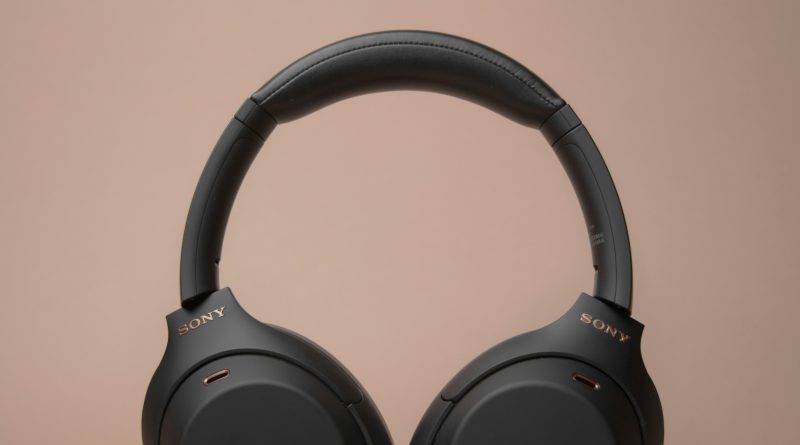
Sony WH-1000XM6: One Year Later, Still the ANC King, But the Cracks Are Showing.
By OFOKI TECH | August 30, 2026
Sony launched the WH-1000XM6 in May 2025. Fifteen months later, the headphone remains Sony’s flagship over-ear ANC model and the benchmark against which all competitors are measured. But a market that once had no clear alternative has become crowded. Apple’s AirPods Max 2, Bose’s QuietComfort Ultra 2, Sennheiser’s Momentum 5, and Sony’s own 1000X THE COLLEXION have all arrived with features the XM6 lacks. RecordingNow published a « 1 Year Later » review on August 14, 2026, and the verdict is nuanced: the XM6 is still the best daily driver for most users, but it is no longer the automatic choice for everyone.
The QN3 Processor: 7x Faster, but What Does That Mean?
The headline specification is the HD Noise Canceling Processor QN3. Sony’s official product page states that the QN3 is 7x faster than the QN1 found in the WH-1000XM5, optimizing 12 microphones in real time. GSMArena’s review confirmed that the ANC excels at reducing repetitive noises — airplane engines, train rumbles, air conditioning — and has improved at suppressing accidental loud noises like train announcements compared to the XM5.
But the 7x figure is marketing, not a user-perceptible metric. In real-world use, the XM6’s ANC is marginally better than the XM5’s, not transformative. RTings’ technical review measured the XM6 as having « incredible noise attenuation » and noted that the microphone system renders voices « clearly and with depth and warmth » for calls. The improvement is real. It is just not seven times real.
Sound Quality: Best Sony Yet, But Not Best in Class
RecordingNow’s reviewer, a professional music producer and audio engineer, scored the XM6’s sound quality at 8.7 out of 10. The assessment was that the XM6 is « the best-sounding Sony WH-1000 series headphone right out of the box, » with larger and cleaner bass than the XM5 while retaining treble detail. The new 10-band EQ allows users to extract more potential than previous generations.
However, the reviewer placed the XM6 in an « in-between state »: slightly superior to last generation’s mid-range ANC headphones under $600, but not reaching the level of the Bowers & Wilkins Px8, Focal Bathys, or Bang & Olufsen H95. The soundstage remains narrow and compressed. The « Cinema Mode » spatial audio is praised as a genuine improvement for movies and media, simulating a theater environment effectively, but it does not fix the fundamental lack of openness in music playback.
The Missing Feature: No Lossless USB-C Audio
The most criticized omission is the lack of USB-C audio playback. Digital Trends’ Simon Cohen wrote that he was « stunned that the XM6 lack a lossless connection via USB-C. Virtually every set of current flagship headphones, from Bose to Apple to Beats to Bowers & Wilkins, has this option. It’s the one flaw in an otherwise stellar product. »
SoundGuys echoed the criticism, noting that the USB-C port is used exclusively for charging and that wired lossless audio requires the 3.5mm jack — a connector that is disappearing from smartphones. The practical impact is limited for most users: Bluetooth LDAC performs well enough that few will hear the difference. But for audiophiles and for future-proofing, the omission is significant. When the battery eventually degrades, USB-C audio would provide another way to use a $450 investment. Without it, the XM6 is a wireless-only device.
Comfort: Light, but the Clamping Force Bites
The XM6 weighs just a few grams more than the XM4 and XM5, making it one of the lightest headphones in its class. RecordingNow scored comfort at 8.5 out of 10, praising the wider, square-ish headband design over the XM5’s oval shape. But the clamping force is « quite strong from the factory, » and the interior earcup space remains small, causing ears to press against the fabric.
GSMArena noted a similar issue: the curvature of the ear cups, combined with glasses, made the fit worse than previous models, which in turn reduced the effectiveness of the ANC seal. The clamping force is expected to loosen over time, as it did with the XM5, but out-of-the-box comfort is a genuine concern for users with larger heads or glasses.
Build Quality: Still Plastic at $450
The XM6 remains mostly plastic, a fact that RecordingNow described as disappointing at $450 retail. The one potential improvement is a metal piece in the hinge, addressing the broken hinge issue that plagued the XM5. « Let’s hope this fixes the broken hinge issue long-term, but only time will tell, » the reviewer wrote. The build quality is on par with the Sennheiser Momentum 4 but « clearly below » the Bose QC Ultra, AirPods Max, and premium options from Bowers & Wilkins and Focal.
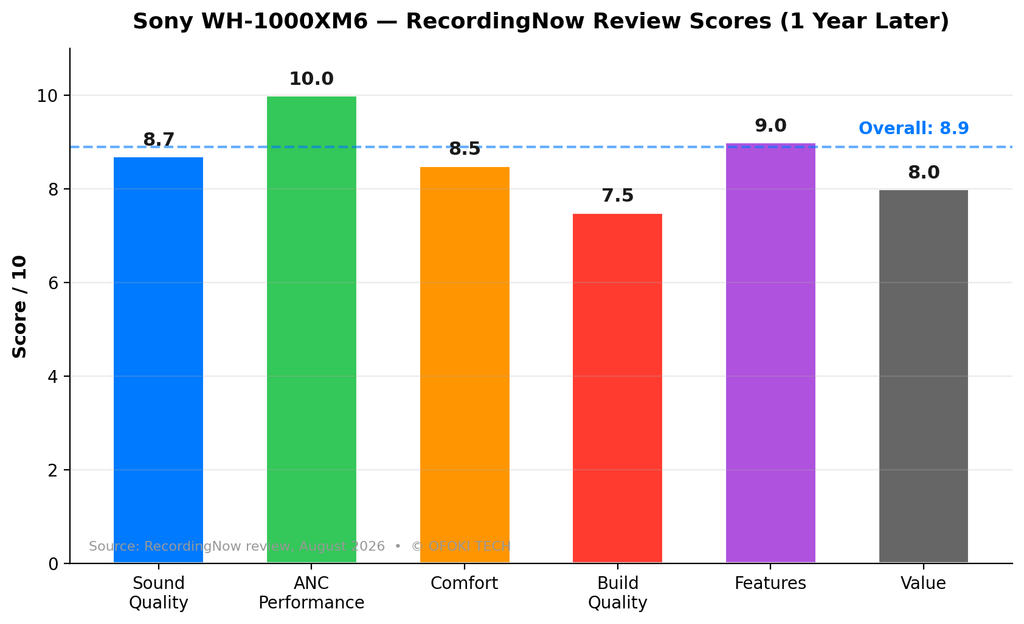
Figure 1: RecordingNow review scores after one year of use. Overall: 8.9/10. Source: RecordingNow, August 2026.
Battery Life: 31+ Hours, and It Holds
Sony claims up to 30 hours of battery life with ANC on. RTings measured over 31 hours, and SoundGuys reported over 37 hours in their testing. A 3-minute quick charge provides 3 hours of playback. The battery has held up well over the first year, with no significant degradation reported in long-term user reviews. This is the area where the XM6 most clearly justifies its price: the combination of lightweight design, compact case, and multi-day battery makes it the most practical travel headphone on the market.
The Competition: A Crowded Field
In 2025, the XM6 had few peers. In 2026, the landscape has shifted. The Apple AirPods Max 2 offers superior ecosystem integration and build quality at a higher price. The Bose QuietComfort Ultra 2 matches the XM6’s ANC with better comfort. The Sennheiser Momentum 5 and Sony’s own 1000X THE COLLEXION offer superior sound quality for audiophiles. The Sonos Ace and Bowers & Wilkins Px7 S3 target the premium lifestyle segment.
The XM6’s advantage remains its combination of ANC performance, battery life, and weight. No competitor matches all three. But for buyers who prioritize sound quality, the Momentum 5 and THE COLLEXION are better choices. For buyers who prioritize comfort, the Bose QC Ultra 2 wins. And for buyers in the Apple ecosystem, the AirPods Max 2 is the logical default.
Verdict
The Sony WH-1000XM6 is still the best all-around ANC headphone for the average user. Its ANC is class-leading, its battery is unmatched, and its weight makes it wearable for hours. The Cinema Mode spatial audio is a genuine differentiator for media consumption. And the 10-band EQ gives power users enough flexibility to tune the sound to their preference.
But the cracks are visible. The lack of USB-C lossless audio is a glaring omission for a 2025 flagship. The clamping force and small earcups limit comfort for a subset of users. The plastic construction feels cheap at $450. And the competition has caught up: where the XM6 was once the clear default, it is now one of several excellent options.
For XM4 or XM5 owners, the XM6 is a worthwhile upgrade for the ANC and sound quality improvements alone. For new buyers, the decision depends on priorities. If you want the best noise cancellation and the longest battery, buy the XM6. If you want the best sound, look at Sennheiser or Sony’s own THE COLLEXION. If you want the best comfort, look at Bose. The XM6 is no longer the automatic choice. It is the safe one.