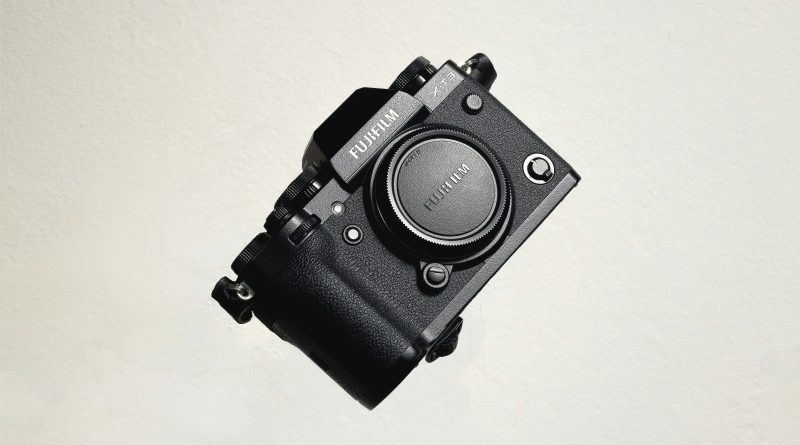
Fujifilm Shipped 1.16 Million Cameras in 2025 and Overtook Nikon for the First Time
By OFOKI TECH | August 22, 2026
The camera industry published its annual shipment figures last week, and one number stands out. Fujifilm shipped 1,160,000 cameras in 2025, capturing 11.8% of the global market. Nikon shipped 880,000, or 8.9%. The gap is not large in absolute terms, roughly 280,000 units, but the direction is. Fujifilm has never held the third position in global camera shipments before. Nikon has held it for decades.
The data comes from Nikkei Industry Map 2027, the annual industry report published by Nihon Keizai Shimbun. The figures measure manufacturer shipments, not retail sales. They include every camera body shipped from factory to distributor: mirrorless, DSLR, and fixed-lens compacts.
The Full Ranking
The 2025 table shows a market more concentrated than ever. Canon leads with 4.5 million units and 45.7% market share. Sony is second with 2.42 million units and 24.6%. Fujifilm is third at 1.16 million and 11.8%. Nikon is fourth at 880,000 and 8.9%. Panasonic holds fifth with 430,000 units. Ricoh Imaging, which tripled its shipments from 70,000 to 210,000 units, sits in sixth. OM Digital is seventh with 150,000.
The top three manufacturers, Canon, Sony, and Fujifilm, now account for 82.1% of every camera shipped worldwide. The remaining 18% is split across four brands. This is an oligopoly by any standard.
Fujifilm’s Trajectory
Fujifilm’s growth is the most striking figure in the report. In 2023, the company shipped 430,000 cameras and held 6.0% of the market. In 2024, it shipped 740,000 units for 9.0%. In 2025, it reached 1.16 million units and 11.8%. That is a 170% increase in unit shipments over two years, during a period when the overall market grew 37%.

The growth is not evenly distributed across Fujifilm’s product line. The X100VI, a fixed-lens compact with a 35mm equivalent lens and no zoom, has remained on backorder for most of 2025 despite being launched in early 2024. The X-E5, an APS-C mirrorless body, won Amateur Photographer’s Camera of the Year award and saw its first price drop in March 2026 after months of selling at full retail. The X-M5, Fujifilm’s most affordable interchangeable-lens camera, topped sales charts at Japanese retailer Map Camera for the April 2025 to March 2026 period.
These are not professional workhorse cameras. They are enthusiast and lifestyle products that prioritize design, film simulation presets, and portability over specification sheets. Fujifilm’s imaging revenue for the first nine months of fiscal year 2025 reached approximately 485.7 billion yen, up 13.8% year over year. The professional segment grew faster than the consumer segment, but the volume driver is clearly the lower end.
Nikon’s Decline
Nikon’s numbers move in the opposite direction. The company shipped 960,000 cameras in 2024 and 880,000 in 2025. That is an 8% drop in a market that grew 21%. Nikon’s market share fell from 11.7% to 8.9%.
The decline is not a mystery. Nikon has not released a major new camera body since the Z6 III in June 2024. The Z5 II, launched in early 2025, is a mid-range refresh. The Z9 II has been rumored since February 2026 but remains unannounced. The Z7 III, which photographers have been waiting for since late 2023, has not materialized. Nikon’s first-quarter fiscal year 2027 results, published in August 2026, showed a 22% drop in camera shipments and a 27.5% drop in imaging operating profit. The company cut its full-year forecast from 900,000 to 850,000 units.
Nikon is not failing. It remains profitable, with an 11.1% operating margin in imaging. But it is losing the volume race because it has no product to sell to the buyers who are driving market growth: first-time camera owners, content creators, and enthusiasts who want a camera that fits in a jacket pocket and posts directly to Instagram.
The Compact Revival
The broader market trend behind Fujifilm’s rise is the return of the compact camera. After a decade of smartphone cannibalization, fixed-lens cameras are selling again. CIPA data for 2025 shows 2.44 million compact cameras shipped, up 30% year over year. Revenue grew nearly 50% because the compacts selling are not cheap point-and-shoots. They are premium models like the Fujifilm X100 series, the Ricoh GR, and Sony’s ZV line.
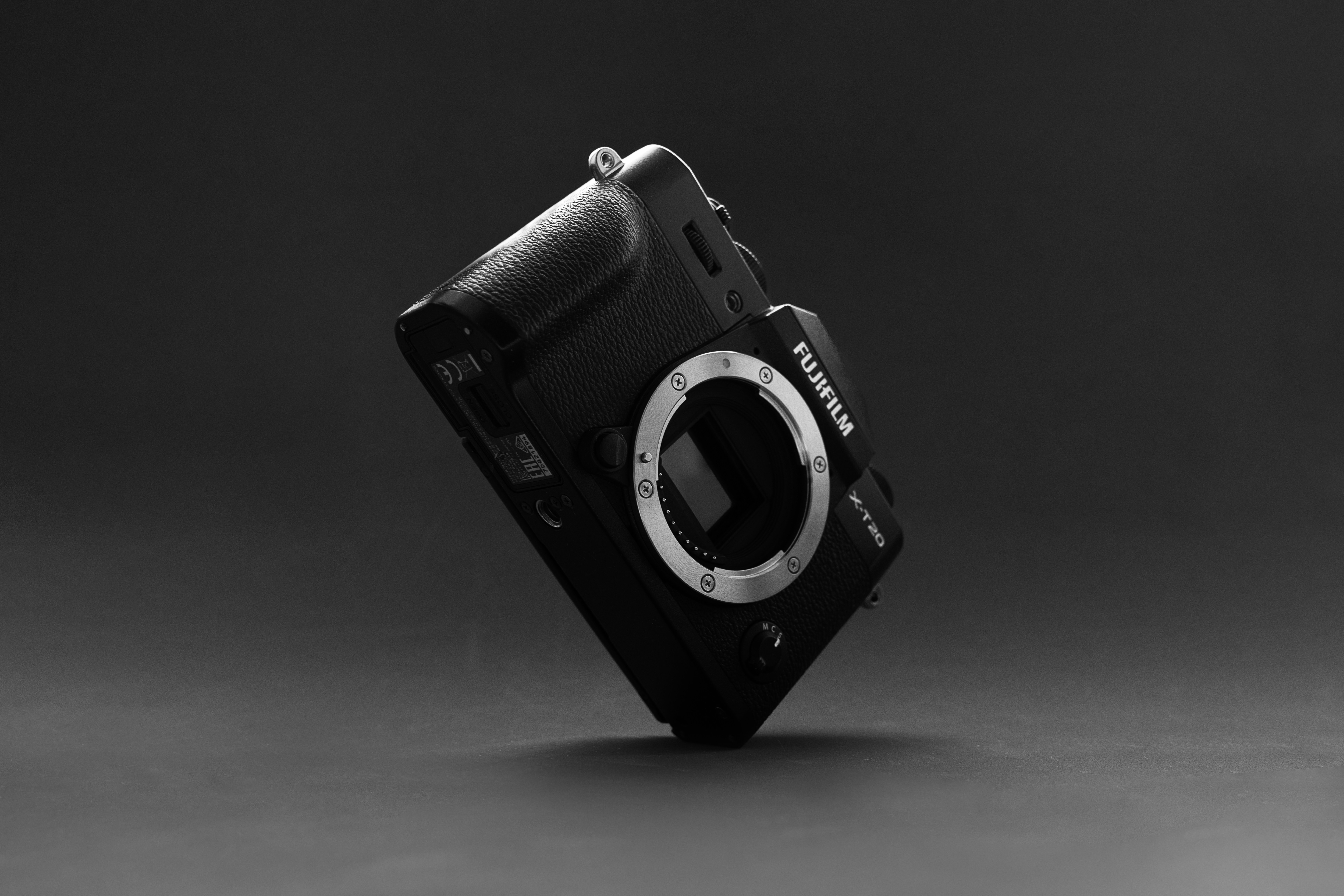
This creates a market structure that did not exist five years ago. Buyers are choosing between a $1,400 smartphone and a $1,300 compact camera, and an increasing number are choosing both. The compact camera has become a fashion accessory and a creative tool for people who find smartphone photography limiting but do not want to invest in a system of lenses.
Fujifilm dominates this segment because it understood it earlier than its competitors. The X100VI’s film simulations, which emulate classic Fujifilm film stocks, have become a selling point in themselves. The camera’s retro design, inherited from the company’s film camera heritage, photographs well on social media. The product is as much a cultural object as a technical instrument.
What This Means for Nikon
Nikon has two choices. It can accept its position as a niche professional brand, focusing on full-frame mirrorless bodies for working photographers and letting the consumer market go. This is the path it appears to be on. The Z9 and Z8 are excellent cameras for wildlife, sports, and commercial work. The Zf is a capable full-frame body with retro styling that appeals to enthusiasts. None of these products compete with the X100VI or the GR IIIx.
Alternatively, Nikon could re-enter the compact market. It has the engineering capability. The Nikon 1 series, launched in 2011, was a mirrorless system with small sensors and fast autofocus. It failed because it was positioned against Micro Four Thirds and APS-C systems rather than as a premium compact. A fixed-lens compact with a large sensor, retro design, and Nikon’s optical pedigree could compete with Fujifilm. Nikon has not announced such a product.
Verdict
Fujifilm’s rise to third place is not a fluke. It is the result of a deliberate strategy to own the enthusiast compact segment, executed with products that are genuinely desirable. The X100VI is not the best camera on the market by any technical measure. It has one lens, no zoom, and an APS-C sensor that is smaller than full-frame competitors. But it is the camera that people want to carry.
Nikon’s problem is not that Fujifilm is better. It is that Nikon has nothing to sell to the buyers who are entering the camera market for the first time. The Z5 II is a fine camera. It is also invisible to a 25-year-old who wants a camera that looks good in a cafe and posts to TikTok without editing.
If Nikon wants to reclaim third place, it needs a product that competes with the X100VI. Not a better Z6. A smaller, simpler, more beautiful camera. Until then, Fujifilm will keep selling every unit it can manufacture.
Sources and further reading
- Digital Camera World: Fujifilm’s viral status pushes Nikon out of top three
- Camera Decision: Fujifilm passes Nikon in 2025 camera shipments
- Petapixel: Fujifilm X100VI atop sales chart feels inevitable
- Amateur Photographer: Fujifilm X-E5 price drop
- Fstoppers: Sony dominates sales while Fujifilm wins photography culture
- PhotographyTalk: Nikon camera sales drop 22%
- PhotoWorkout: Camera market shares 2025-2026