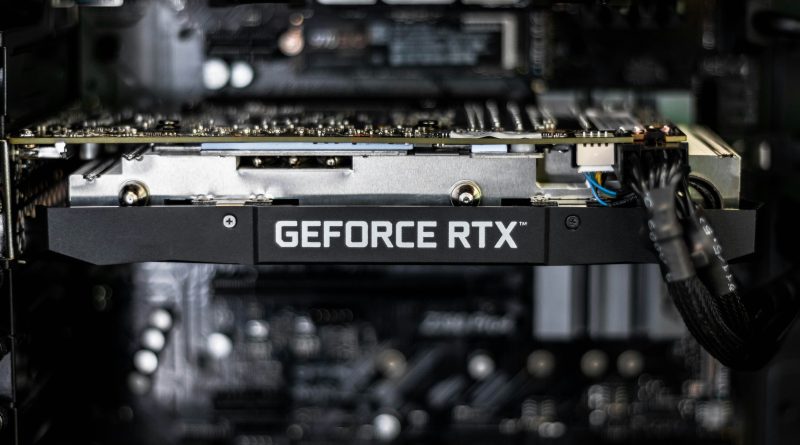
NVIDIA Reportedly Testing Blackwell TITAN or RTX 5090 Ti With 700-750W TDP
By OFOKI TECH | August 11, 2026
NVIDIA is reportedly working on a higher-end variant of the RTX 5090 that could launch as either a TITAN-branded card or an RTX 5090 Ti. According to a report from the leaker Moore’s Law is Dead, a source who tested the GPU in 2025 has confirmed that the « Blackwell TITAN » is real and has been in testing since at least the first half of last year. The source cautioned that there is no guarantee the card will launch, and that the specifications may have changed since testing. Prior rumors have suggested a possible Q3 2026 launch window.
Reported Specifications
The purported GPU is based on a cut-down GB202 die with approximately 5% more CUDA cores than the RTX 5090. For context, the RTX 5090 already features 21,760 CUDA cores, so a 5% increase would put the new card at roughly 22,850 cores. Earlier rumors from the same leak channel have suggested the full GB202 die could carry up to 24,576 CUDA cores, though it is unclear whether the TITAN or 5090 Ti would use the full die or a partially cut-down variant.
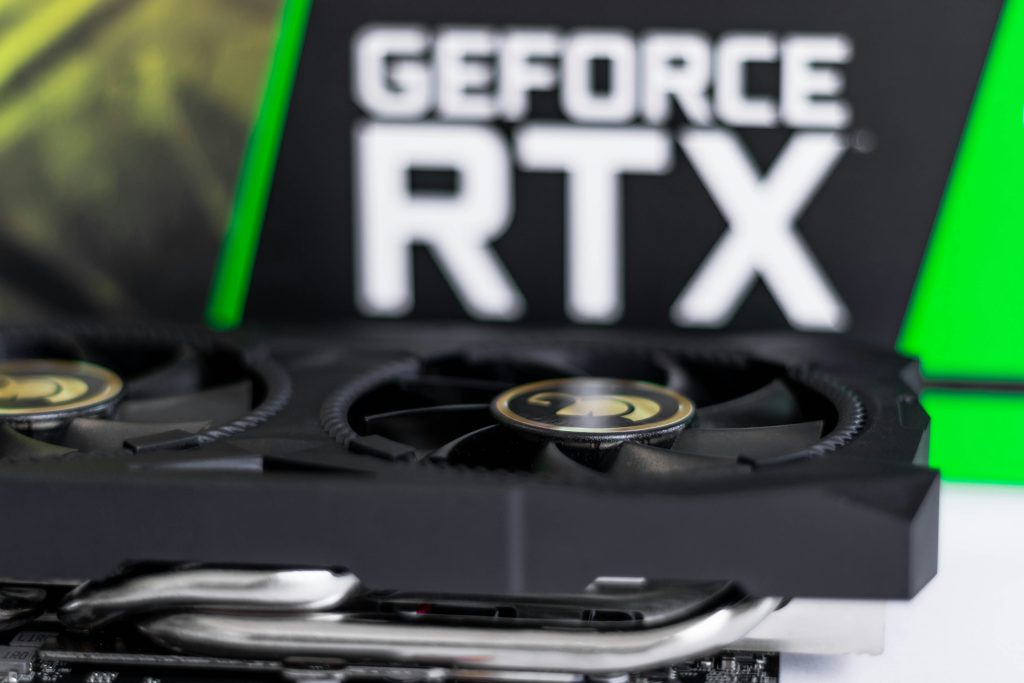
The most striking specification is the power draw. The source reported a standard TDP of 700-750W, with unlocked prototypes capable of hitting 1000W or more. This would make it the most power-hungry consumer GPU ever tested. The RTX 5090 Founders Edition already carries a 575W TDP and requires a 1000W power supply. The TITAN variant would likely demand a 1500W PSU or higher for stable operation.
Performance at the time of testing was reportedly averaging 10% faster than the RTX 5090. The source noted that with faster memory and aggressive binning, NVIDIA could potentially squeeze out 15-20% more performance than a stock RTX 5090. This would put the card above even the most extreme factory-overclocked RTX 5090 models currently available.
Physical Size and Cooling
The source described the prototype as physically massive, stating that they had to use two hands to hold it. This suggests a multi-slot cooler design, likely exceeding the triple-slot footprint of the RTX 5090 Founders Edition. Given the power targets, liquid cooling or a hybrid air-liquid solution would be a practical necessity for sustained workloads.
Market Context: The Ultra-Premium GPU Segment
The existence of such a card might seem unnecessary given that the RTX 5090 already retails for $1,999 and frequently sells for $2,500 to $3,200 on the secondary market. However, recent releases in the ultra-premium segment suggest there is demand for even higher-end products. The MSI RTX 5090 Lightning Z, a limited-edition card with a factory liquid-cooling setup, sold out almost immediately despite a price point exceeding $5,000 in some markets. MSI produced only 1,300 units worldwide. Similarly, the ASUS ROG Matrix RTX 5090, priced at $3,999, has also sold out in most regions.
These sales indicate that a subset of enthusiasts and professionals are willing to pay substantial premiums for the absolute highest performance available. The MSI Lightning Z, in particular, offers a useful reference point: in Tom’s Hardware testing, it performed 12% faster out of the box than a stock RTX 5090 FE, and 18% faster when manually overclocked. Its Extreme vBIOS allows the card to draw up to 1000W. The rumored TITAN or 5090 Ti would likely target this same performance tier, but as a first-party NVIDIA product rather than an AIB partner card.
The Cancellation Risk
NVIDIA has a history of developing ultra-high-end GPUs that never reach market. The company never released a TITAN Ada (RTX 4090 Ti) despite widespread rumors and apparent prototyping. The same fate could befall the Blackwell TITAN. The decision likely depends on yield rates for the GB202 die, competitive pressure from AMD’s RDNA 5 architecture, and whether NVIDIA believes the market can absorb another tier above the already-expensive RTX 5090.
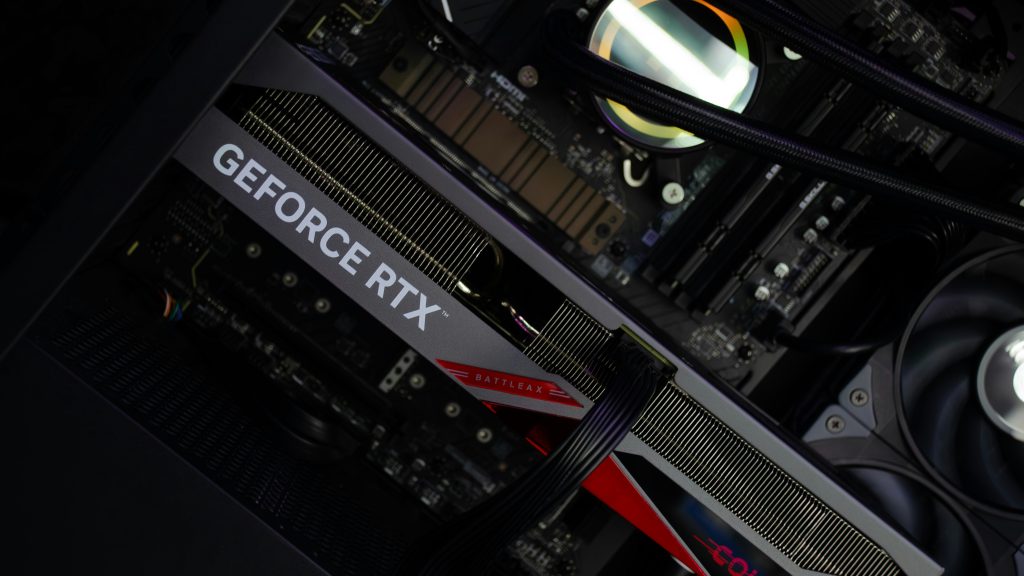
If the card does launch, it would likely arrive in Q3 2026 based on prior rumors. Until then, the RTX 5090 remains NVIDIA’s flagship, and the MSI Lightning Z and ASUS ROG Matrix represent the closest approximations of what a factory-overclocked, ultra-high-power Blackwell GPU can achieve.
Sources and further reading