Insta360 Mic Pro Enters the Wireless Audio Fray With a Customizable E-Ink Display and 32-Bit Float Recording
By OFOKI TECH | July 30, 2026
Insta360 has officially launched the Mic Pro, its first flagship wireless microphone system, positioning it as a direct challenger to DJI‘s dominance in the creator audio space. Announced in July 2026 and priced from $329.99 for the standard two-transmitter, one-receiver kit, the Mic Pro pairs a customizable E-Ink display on each transmitter with a three-microphone array, 32-bit float internal recording, and AI-driven noise cancellation. The launch marks Insta360’s most serious push yet into professional audio accessories, expanding an ecosystem that already spans 360° cameras, action cameras, and gimbals.
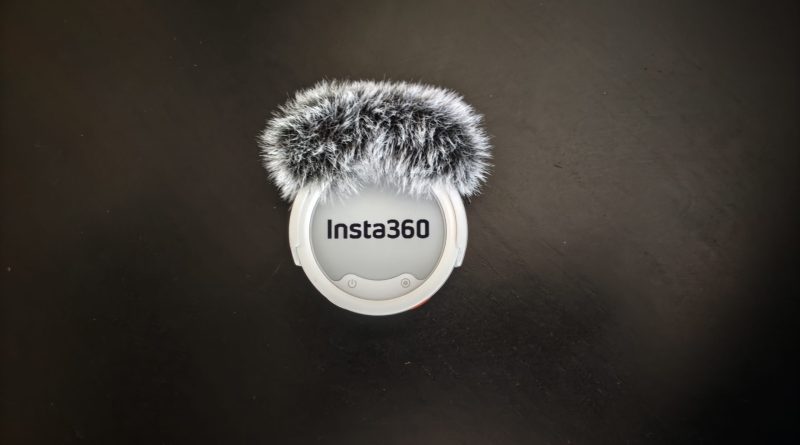
The E-Ink Display as a Branding Tool
The Mic Pro’s most immediately visible differentiator is its circular 1.22-inch E-Ink screen on every transmitter. With a resolution of 240×208 pixels and a six-color palette, the display can show custom logos, graphics, or images uploaded via the Insta360 app. Because E-Ink only draws power when refreshing, the screen remains visible indefinitely—even when the transmitter is powered off—without impacting the 10-hour battery life. In testing by TechRadar, the matte display proved easily readable in bright sunshine, behaving « very much like ink » without the glare issues common to OLED panels. For creators and brands, the feature turns each microphone into a visible on-camera identity marker rather than a device to be hidden.
A Three-Microphone Array With Selectable Polar Patterns
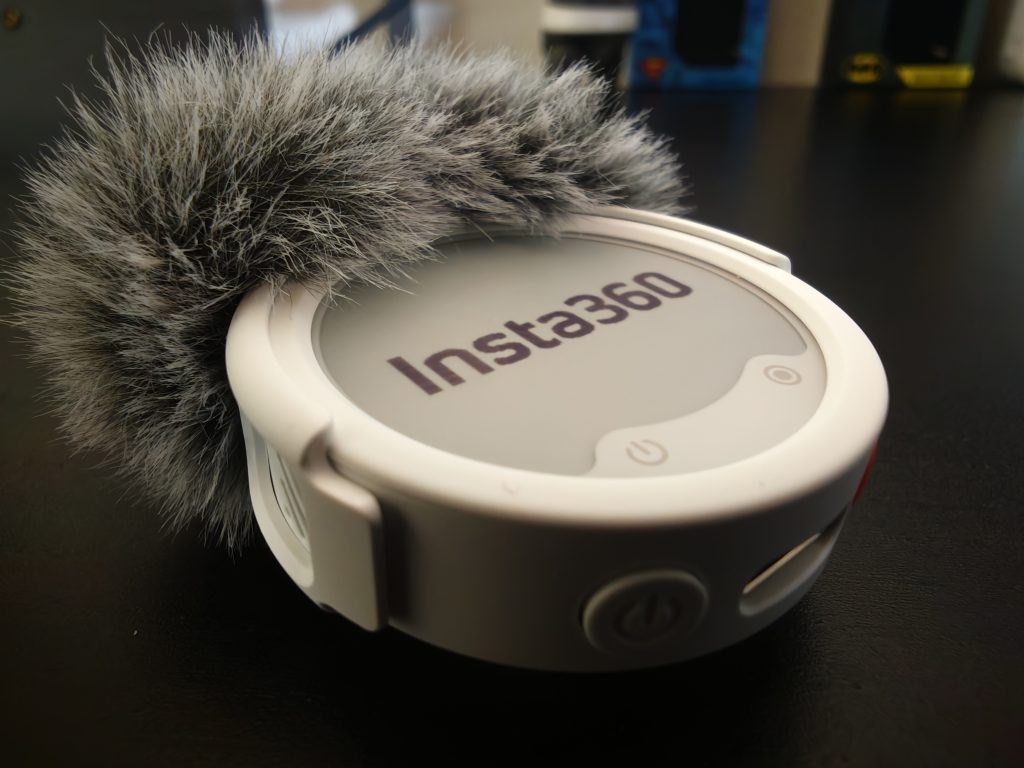
Beneath the branding layer, each Mic Pro transmitter houses three microphones arranged in an array that uses digital signal processing to simulate four distinct pickup patterns: omnidirectional, super-directional, cardioid, and figure-8. These are not true multi-capsule configurations but are digitally constructed from the omnidirectional inputs. In TechRadar’s review, the reviewer found the patterns most useful when mounting the transmitter on a camera’s cold shoe in cardioid or super-directional mode, effectively converting it into a passable on-camera directional microphone—a flexibility that DJI’s Mic series does not currently offer. SoundGuys noted that while the Mic Pro is larger than rivals like the DJI Mic 3, the sound quality comes « very close to a full-sized microphone, » though chest-mounted use will still pick up vibrations from the chest cavity.
32-Bit Float Internal Recording and Onboard Storage
The Mic Pro records internally at 32-bit float, a format that makes clipping mathematically impossible by capturing an extremely wide dynamic range. Each transmitter carries 32GB of onboard memory, enabling it to function as a standalone portable recorder even when out of wireless range. According to Insta360’s official specs, stereo 32-bit float recording consumes roughly 22.2 hours of storage, while mono 24-bit recording stretches to 60 hours. RedShark News highlighted this as a unique capability in the class, suggesting the transmitters could be mounted in engine bays or near exhausts as « tiny portable sound recorders » where traditional wireless setups would fail.
AI Noise Cancellation and Audio Performance
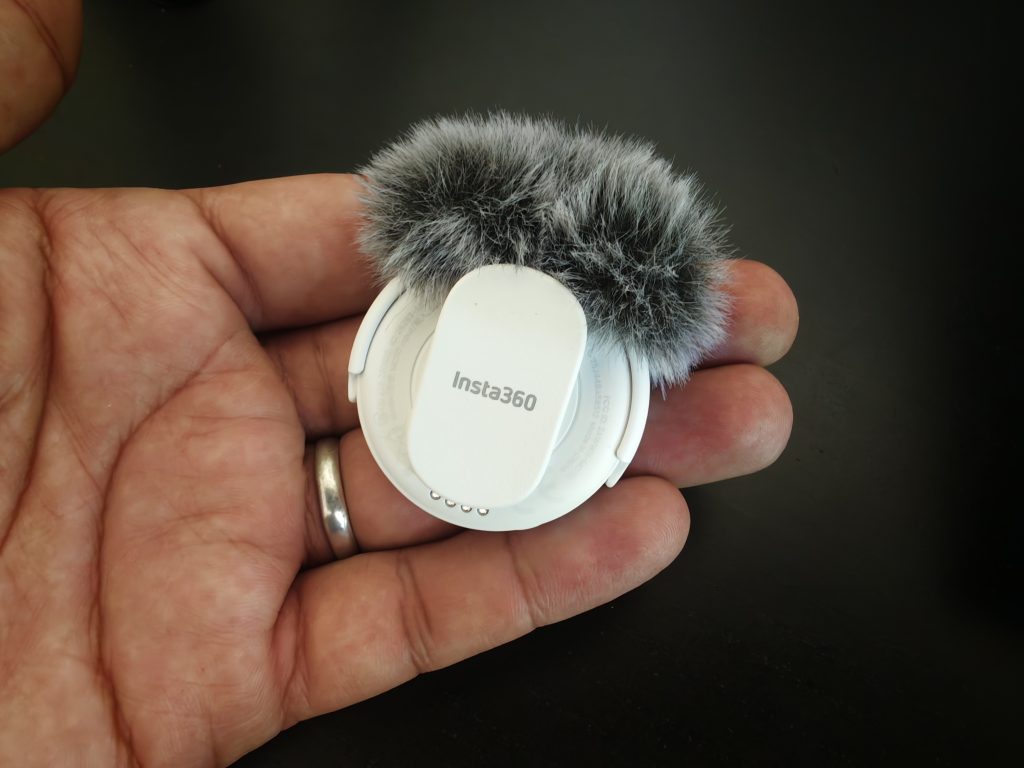
An NPU-powered AI noise cancellation system runs on the transmitters themselves, preserving what Insta360 calls « natural voice clarity » without the artifacts of traditional suppression algorithms. In TechRadar’s head-to-head testing against a running fan, the Mic Pro’s « Strong » noise cancelling setting completely eliminated the background drone and « easily outperformed the DJI Mic 3 in the same conditions. » SoundGuys preferred the raw audio without noise cancellation applied, noting that the mic sounds best when noise reduction is handled in post-production, but acknowledged the AI processing as a viable option for creators who need clean audio straight out of the device.
Wireless Range, Battery, and Multi-Channel Configurations
The Mic Pro operates on a 2.4GHz GFSK wireless protocol with a claimed maximum transmission range of 400 meters in open, interference-free environments. When connected directly to Insta360 cameras like the X5 or Ace Pro 2 via Bluetooth 5.4, that range drops to approximately 100 meters depending on device orientation and shooting conditions. The transmitter battery is rated for 10 hours of continuous use, the receiver for 11 hours, and the included charging case extends total system runtime to 30 hours. A five-minute fast charge yields 1.5 hours of operation for both transmitter and receiver.
Where the Mic Pro diverges most sharply from consumer-grade competitors is in its multi-channel scalability. The system supports 4-to-1 configurations (four transmitters feeding one receiver) and 2-to-4 setups (two transmitters broadcasting to four receivers simultaneously). The latter is particularly relevant for multi-camera productions requiring synchronized audio across separate angles. The receiver also outputs timecode with a deviation of less than one frame over 24 hours, compatible with standard LTC workflows.
Compatibility and Ecosystem Integration
The Mic Pro connects directly to Insta360 cameras via Bluetooth, but the receiver also offers USB-C, Lightning, and 3.5mm TRS outputs, making it compatible with mirrorless cameras, smartphones, and computers. AppleInsider noted that the receiver is « too large to fit in all Mac USB-C ports, » a design caveat for users relying on direct laptop connection. The system also supports external lavalier microphones via a 3.5mm input on each transmitter, though Insta360 does not include a USB-C to 3.5mm adapter in the box—it’s sold separately.
Pricing and Configurations
The Mic Pro is available in black and white colorways. The 2 TX + 1 RX kit retails for $329.99, while a single transmitter can be purchased for $99.99. Additional transmitters and receivers can be added à la carte to scale the system. Insta360 positions the Mic Pro above its own Mic Air, a lighter, single-microphone system designed for vlogging and mobile content creation that lacks internal recording, E-Ink, and multi-channel support.
How It Compares to the DJI Mic 3
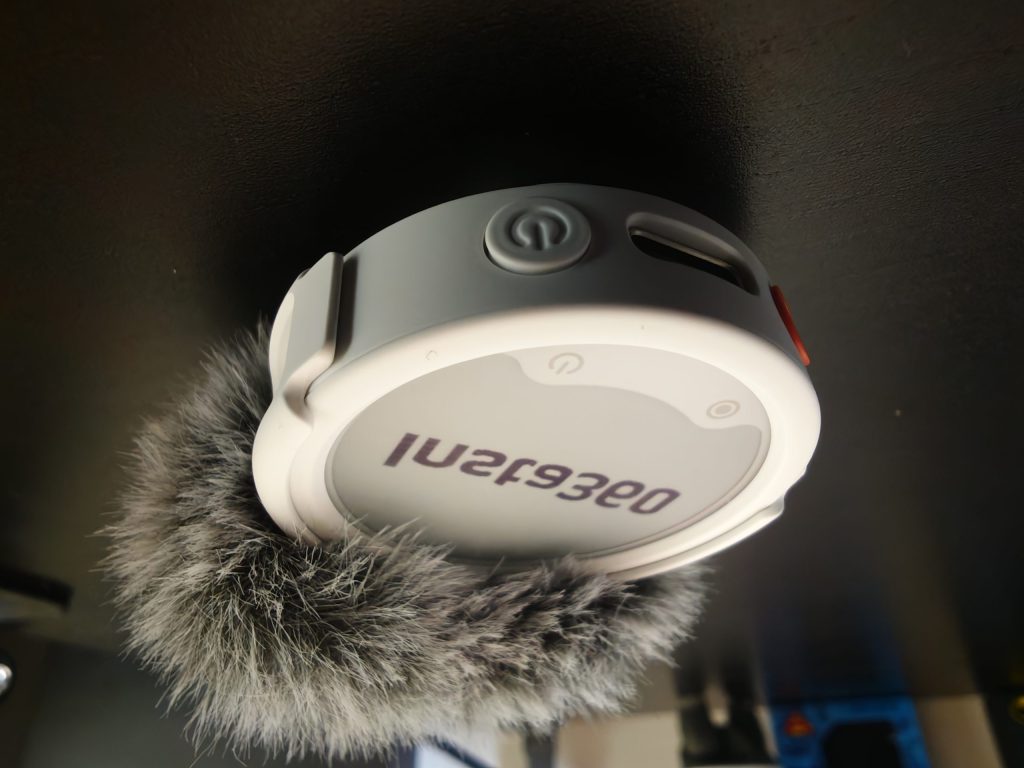
The Mic Pro enters a market where the DJI Mic 3 has established itself as the default premium wireless option. The Mic Pro undercuts or matches DJI on noise cancellation performance while offering features DJI does not: the E-Ink display, selectable polar patterns, stereo 32-bit float internal recording, and 4-to-1 multi-transmitter scalability. The trade-off is size. SoundGuys and RedShark News both noted that the Mic Pro transmitters are noticeably larger than DJI’s equivalents, making them harder to conceal for discreet lavalier use. The charging case also cannot close with windshields attached—a practical frustration that DJI resolved with its Mic Mini and Mic 3 designs.
For creators prioritizing branding visibility, on-camera shotgun versatility, or multi-camera audio workflows, the Mic Pro presents a compelling alternative. For those who need the smallest possible footprint, DJI’s ecosystem may still hold the edge.
Sources and further reading