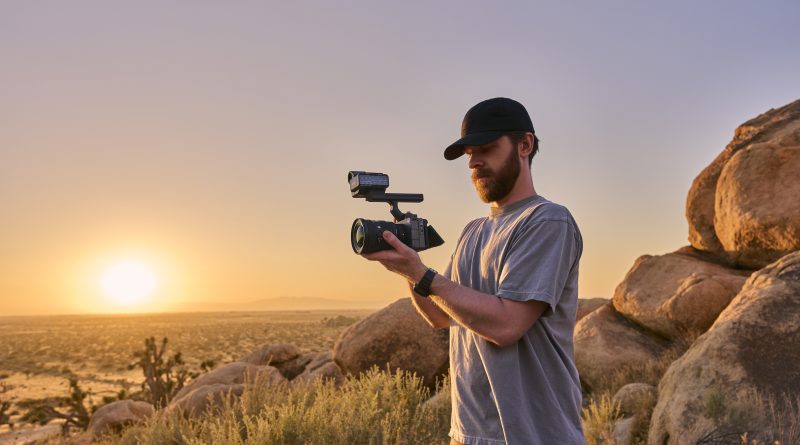
Sony FX5: The Mini Venice That Changes Everything for Under $5,000
By OFOKI TECH | July 22, 2026
Sony announced the FX5 today, July 22, 2026, at 10:00 a.m. ET. The camera is the successor to the FX3, which has dominated the compact cinema camera market since its launch in February 2021. But the FX5 is not a modest upgrade. It is a fundamentally different camera that brings features previously reserved for Sony’s $25,000 Venice 2 and $10,000 BURANO down to a body that costs $4,898.
The headline features are 5K open gate recording, triple base ISO, and internal 16-bit X-OCN RAW. Until today, all three features were unavailable on any Sony camera below the BURANO. The FX5 also ships with a new 16.6-megapixel full-frame stacked sensor, the BIONZ XR2 processor with integrated AI, and a Venice-style menu system that replaces the consumer-oriented Alpha menus that frustrated professional users of the FX3.
This article breaks down what the FX5 offers, what it does not offer, and how it positions itself against Canon’s EOS C50 and Nikon’s ZR.
The Sensor: Why 16.6 Megapixels Is the Right Number
The FX5 uses a 16.6-megapixel full-frame back-illuminated stacked CMOS sensor. In an era where consumer cameras push 50MP and medium format cameras exceed 100MP, 16.6MP sounds modest. But resolution is not the point. The FX5 is a cinema camera, and cinema cameras prioritize light gathering, dynamic range, and readout speed over pixel count.
A lower-resolution sensor means larger individual photosites. Each pixel on the FX5’s sensor is physically bigger than the pixels on a 45MP sensor of the same size. Larger pixels capture more photons, which improves low-light performance and reduces noise at high ISO. The 16.6MP count is also ideal for 5K video, which requires approximately 15 megapixels in a 16:9 crop. The sensor has enough resolution for 5K without line-skipping or pixel-binning, which degrades image quality.
The stacked architecture is equally important. A stacked sensor places the photodiode layer and the readout circuitry layer on separate silicon wafers, connected by through-silicon vias. This design allows for much faster readout speeds than traditional front-illuminated or back-illuminated sensors. The practical benefit is reduced rolling shutter, the jello effect that distorts vertical lines during fast camera movements. The FX3’s rolling shutter was already good. The FX5’s stacked sensor should be significantly better.
Sony claims 15-plus stops of native dynamic range. With the optional Dual Gain readout mode enabled, that figure extends to 16-plus stops. Dual Gain Output is not the same as triple base ISO, though the two technologies are related. Dual Gain captures two readouts per frame, one optimized for highlights and one for shadows, then combines them in-camera. The result is a single frame with extended latitude for color grading. ARRI and Canon have used similar approaches in the ALEXA 35 and C70. Sony’s implementation on the FX5 is the first time the company has offered Dual Gain on a sub-$10,000 camera.
Open Gate: The Feature Filmmakers Have Been Waiting For
Open gate recording captures the sensor’s full 3:2 native aspect ratio rather than cropping to 16:9. The FX5 records 5K open gate at 60 frames per second in X-OCN, with a resolution of 4992 by 3328 pixels. That is the entire height and width of the sensor, with no cropping.
Why does this matter? Most video is delivered in 16:9, but productions increasingly need to deliver the same content in multiple aspect ratios. A commercial might need a 16:9 version for television, a 9:16 version for TikTok and Instagram Reels, and a 1:1 version for social media feeds. Shooting open gate preserves the full sensor area, allowing the editor to reframe in post without losing resolution. A 16:9 extraction from a 3:2 open gate recording uses the full width of the sensor and crops the top and bottom. A 9:16 extraction uses the full height and crops the sides. Both retain more pixels than shooting natively in those formats.
Open gate is also essential for anamorphic lenses. Anamorphic lenses squeeze a wide image onto a standard sensor, which is then unsqueezed in post. The squeeze ratios range from 1.3x to 2.0x. A 2.0x anamorphic lens on a 3:2 sensor produces a 2.66:1 final image, wider than standard cinema scope. The FX5 includes anamorphic de-squeeze display options for 1.3x, 1.5x, 1.6x, 1.8x, and 2.0x squeeze ratios, visible in real time on the LCD and the optional EVF.
Until today, Sony reserved open gate for the Venice 2 and BURANO, cameras priced at $24,999 and $10,000 respectively. Canon brought open gate to the sub-$5,000 market with the EOS C50 in late 2025, which records 7K open gate. The FX5’s 5K open gate is lower resolution than Canon’s 7K, but the FX5’s stacked sensor and 16-bit RAW recording give it advantages in dynamic range and color grading latitude that the C50’s 12-bit Cinema RAW Light cannot match.
One limitation: open gate recording is currently available only in X-OCN. Sony has announced that open gate in XAVC-I will come in Firmware 2.0, scheduled for August 2027. Until then, shooters who prefer the smaller file sizes of XAVC will need to record in standard 16:9 or 17:9 crops.
Triple Base ISO: Three Native Sensitivities
Most cinema cameras offer dual base ISO: two discrete native sensitivities at which the sensor’s signal-to-noise ratio is optimized without digital amplification. The FX3 has dual base ISO at 800 and 4000 in S-Log3. When you push above those values, the camera adds digital gain, which adds noise.
The FX5 adds a third native ISO at 12800. The three base ISO values are 800, 4000, and 12800. Each corresponds to a separate analog amplification circuit path on the sensor. The camera does not multiply the signal digitally. It selects a different gain pathway at the hardware level. At ISO 12800 native, the FX5 should theoretically deliver the same clean image quality it achieves at ISO 800, just with a dramatically different exposure baseline.
Canon introduced triple base ISO first, on the EOS C400 and C80. Sony is now matching that capability on the FX5. The third base ISO is consequential for documentary work, event coverage, and any production where lighting cannot be controlled. A documentary shooter filming in a dimly lit restaurant or a concert venue can set the camera to ISO 12800 native and capture clean footage without adding lights that would alter the scene’s natural atmosphere.
The tradeoff is that triple base ISO requires more complex sensor circuitry, which contributes to the camera’s higher price and slightly larger body. The FX5 weighs 734 grams, compared to 640 grams for the FX3A. Most of that weight increase comes from the new sensor stack, the larger 3.5-inch screen, and the more powerful cooling system.
X-OCN Internal RAW: 16-Bit for Under $5,000
The most technically significant feature of the FX5 is internal X-OCN recording. X-OCN stands for extended tonal range Original Camera Negative. It is a compressed RAW format that encodes 16-bit scene-linear data in an MXF container. At 16-bit, X-OCN records 65,536 tonal gradations per color channel. A 10-bit ProRes file records 1,024. A 12-bit RAW file records 4,096. The difference is not academic. A colorist working with 16-bit footage has dramatically more latitude when recovering blown highlights, lifting crushed shadows, or preparing footage for HDR mastering and VFX compositing.
Until today, internal X-OCN recording required a camera priced above $10,000. The BURANO costs $10,000. The Venice 2 costs $25,000. Productions shooting on the FX3 that needed 16-bit delivery typically used an external RAW recorder, such as an Atomos Shogun, adding $2,000 or more in cost, bulk, and power draw. The FX5 removes that dependency entirely.
The FX5 offers three X-OCN variants. X-OCN LT is the same codec found on the BURANO. X-OCN C1 produces files approximately 25 percent smaller than LT. X-OCN C2 is optimized for high frame rate recording, offering even smaller file sizes at 5K 120fps and 4K 240fps. All three variants preserve the full 16-bit linear quality. The choice between them depends on storage budget and post-production workflow.
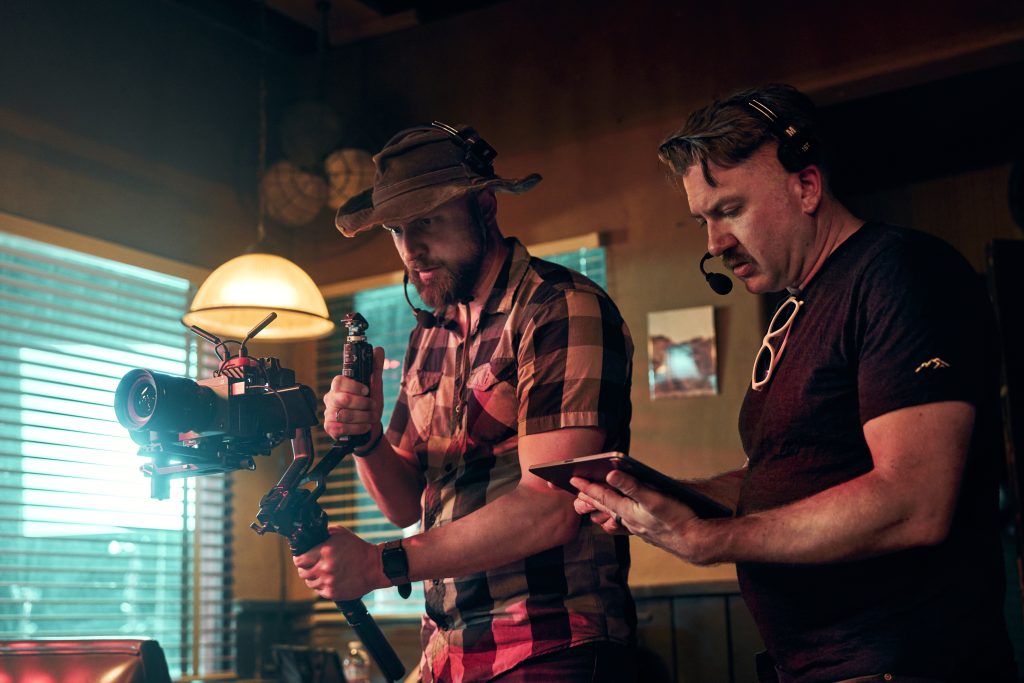
For productions that do not need RAW, the FX5 also records in multiple XAVC codecs. XAVC HS-L uses H.265 compression for smaller file sizes. XAVC S-I uses all-intraframe compression for easier editing. XAVC S-L offers Long-GOP compression for maximum recording time. All XAVC formats support 8-bit and 10-bit color depth, 4:2:2 and 4:2:0 chroma subsampling, and wide color gamut.
The Body: Bigger, But Purpose-Built
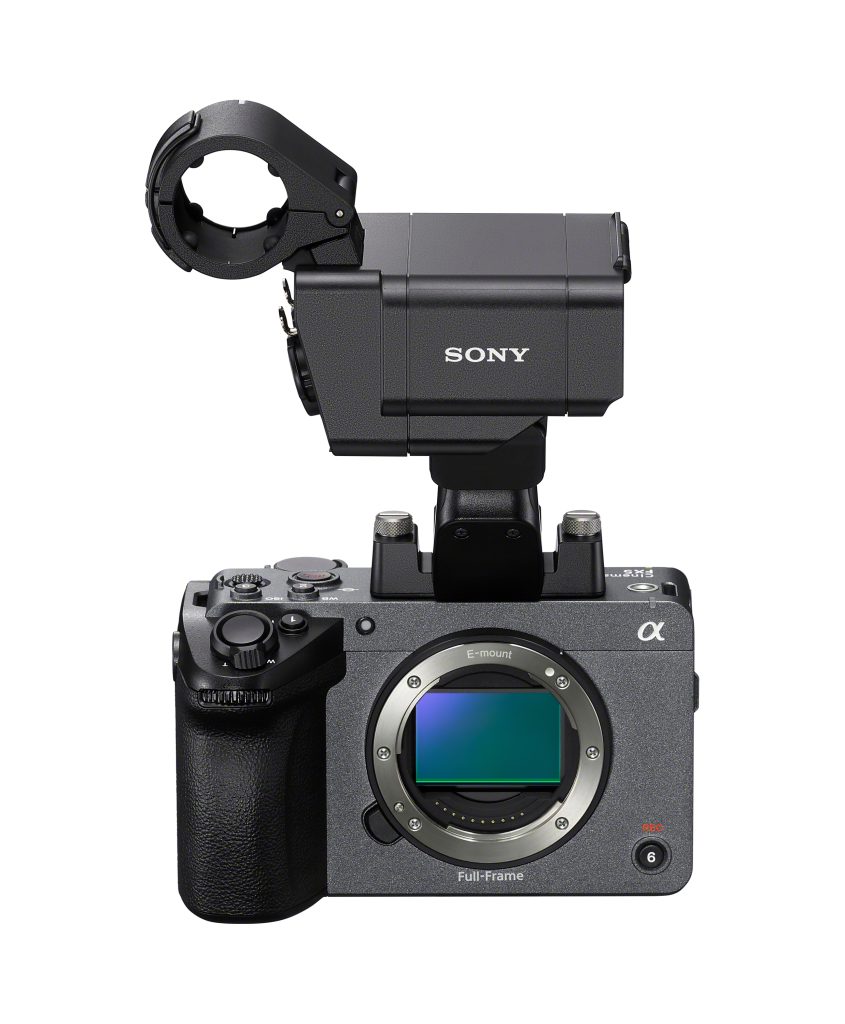
The FX5 is visibly close to the FX3 in form factor but slightly thicker, approximately 1 centimeter according to Sony Alpha Rumors. The body weighs 734 grams, up from 640 grams for the FX3A. The increase comes from the new sensor stack, the larger 3.5-inch fully articulating touchscreen, and the enhanced cooling system.
The cooling system is a significant upgrade. Sony claims the FX5 generates up to three times the airflow of the FX3, with three fan modes: Auto, Minimum, and Off During Recording. The fan is audible in quiet environments, but the Off During Recording mode silences it for interviews and dialogue scenes. For long-form recording in hot environments, the enhanced cooling prevents thermal shutdown, a problem that plagued early units of the FX3 during extended 4K recording sessions.
The 3.5-inch four-axis multi-angle touchscreen is larger than the FX3’s 3-inch panel. It articulates on multiple axes, allowing the operator to position it for high-angle, low-angle, and self-recording shots. The screen displays the BIG 6 menu system, inherited from the Venice 2 and BURANO, which shows six essential parameters, FPS, ISO, Shutter, Iris, Look, and White Balance, on a single screen. This replaces the consumer Alpha menus that FX3 users found frustrating during fast-paced productions.
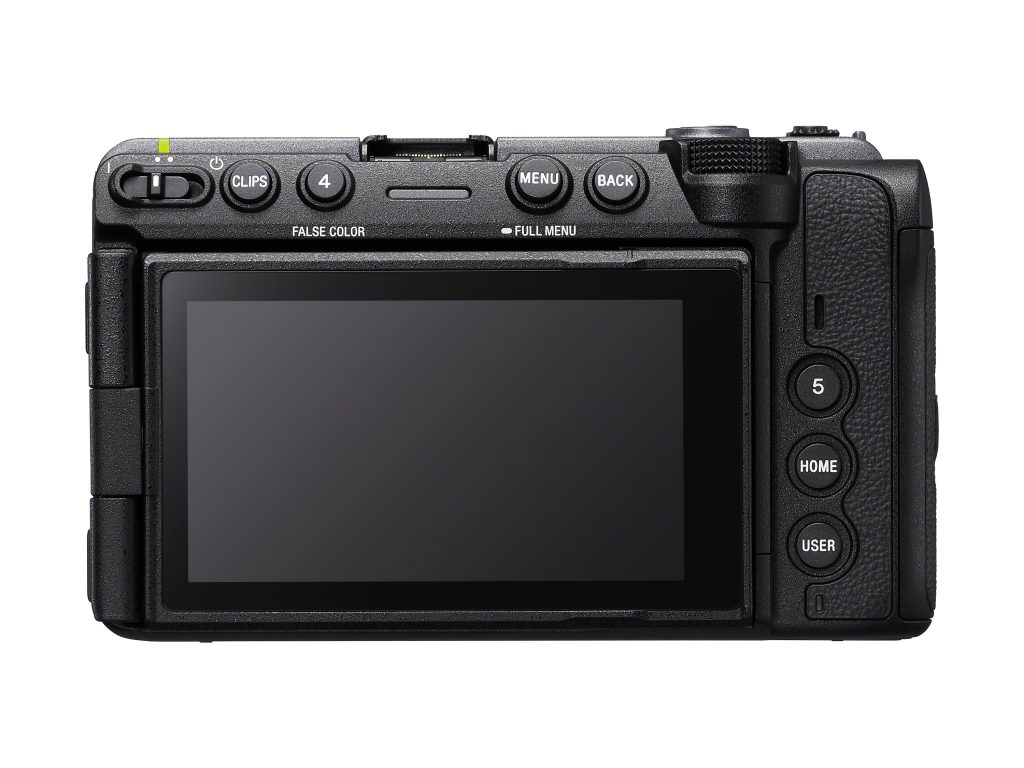
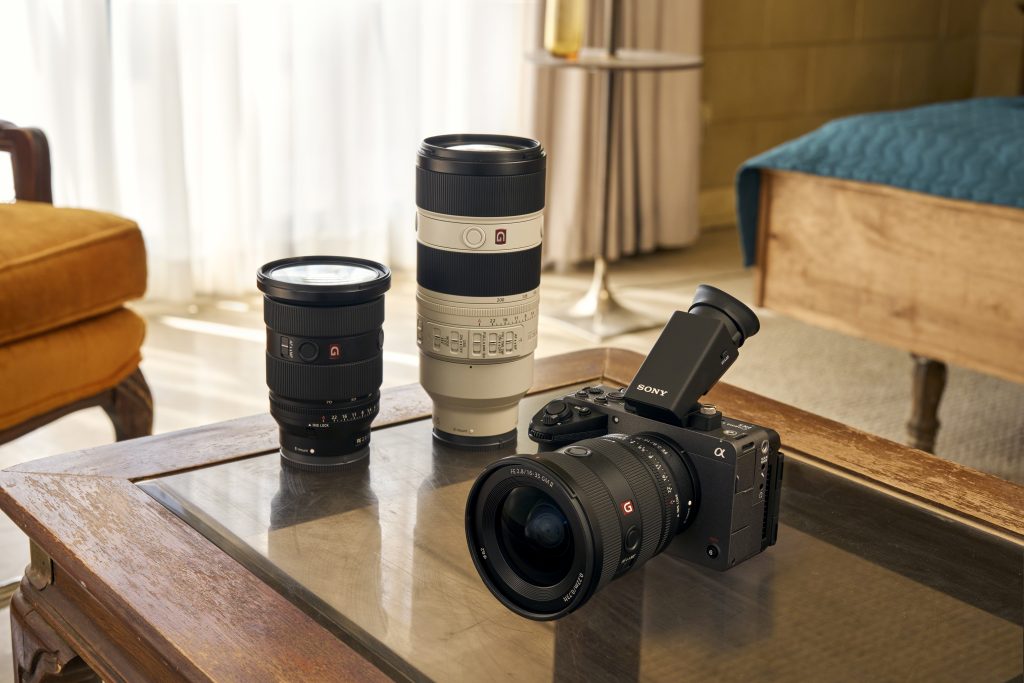
The FX5 does not include a built-in electronic viewfinder. Instead, Sony offers an optional modular tilting EVF that mounts through the Multi Interface Shoe. The EVF costs approximately $799 in Europe. The tradeoff is that the EVF occupies the hot shoe, preventing simultaneous connection of digital audio accessories. For shooters who prefer an EVF, the modular approach keeps the body compact when the finder is not needed. For shooters who work primarily from the LCD, the body remains lighter and less cluttered.
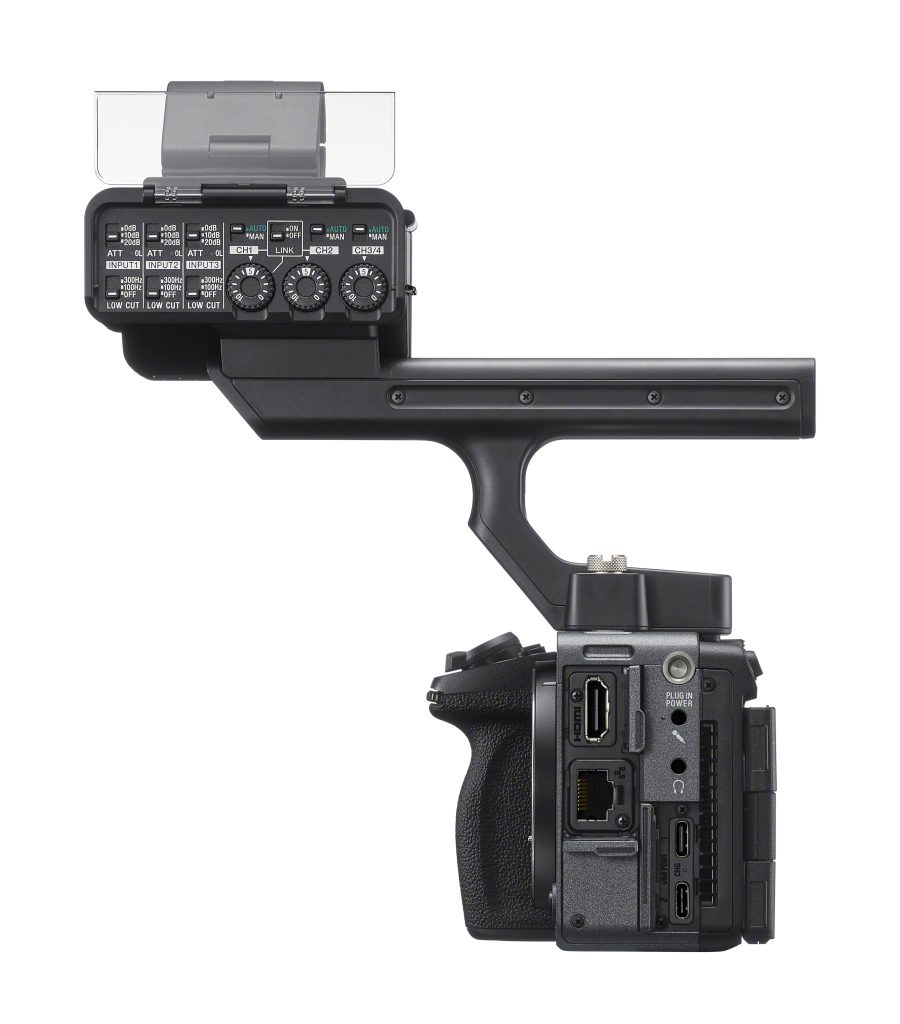
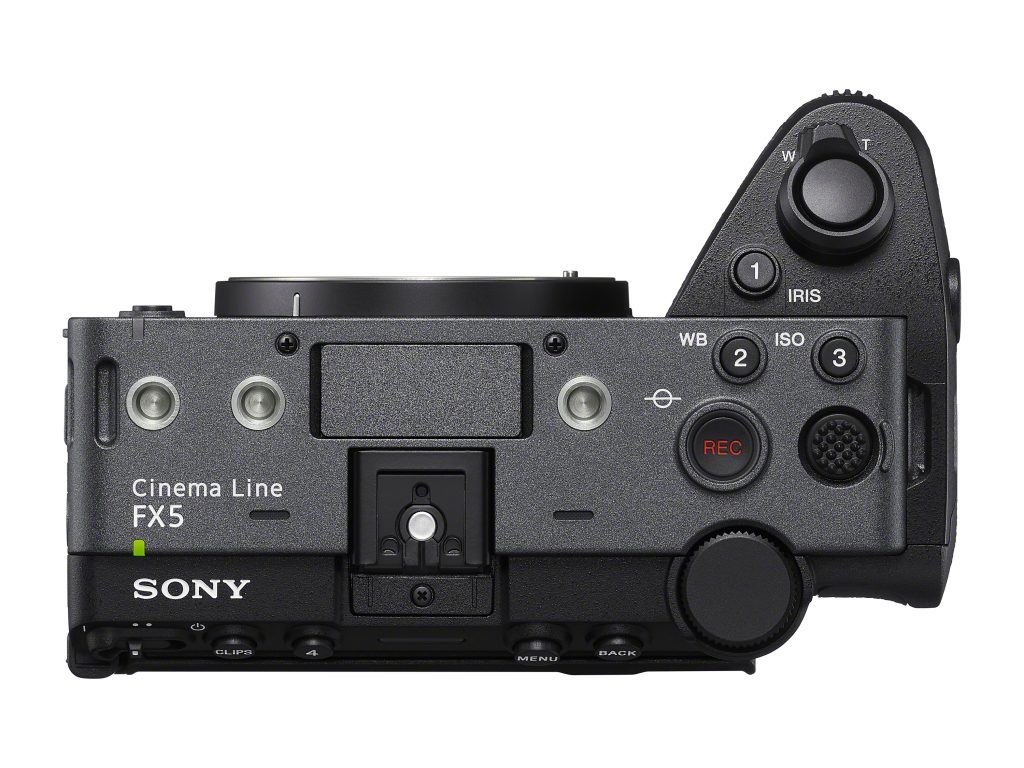
The optional XLR-H2 handle unit adds XLR inputs and supports 32-bit float audio recording. At 32-bit float, the camera captures the full dynamic range of the audio input without clipping. A whispered conversation and a shouted line in the same take are both preserved without manual gain adjustment. The XLR kit costs $5,498, $600 more than the body-only price.
What the FX5 Does Not Have
Sony made deliberate choices about what to exclude. The FX5 has no internal ND filters, unlike the FX6 and FX9. Shooters who need ND must use matte boxes, screw-on filters, or the Mofage POCO II drop-in filter adapter. The absence of internal ND is a cost-saving measure that keeps the body price below $5,000, but it adds bulk and expense for outdoor shooters.
The FX5 has no photo mode. It is a cinema camera, not a hybrid. Users who want stills capability must buy a separate camera, such as the Sony A7R VI or A7 VI. This is a departure from the FX3, which offered full stills functionality. Sony’s logic is that removing photo mode simplifies the menus, reduces firmware complexity, and protects the FX3A’s position for users who need both stills and video.
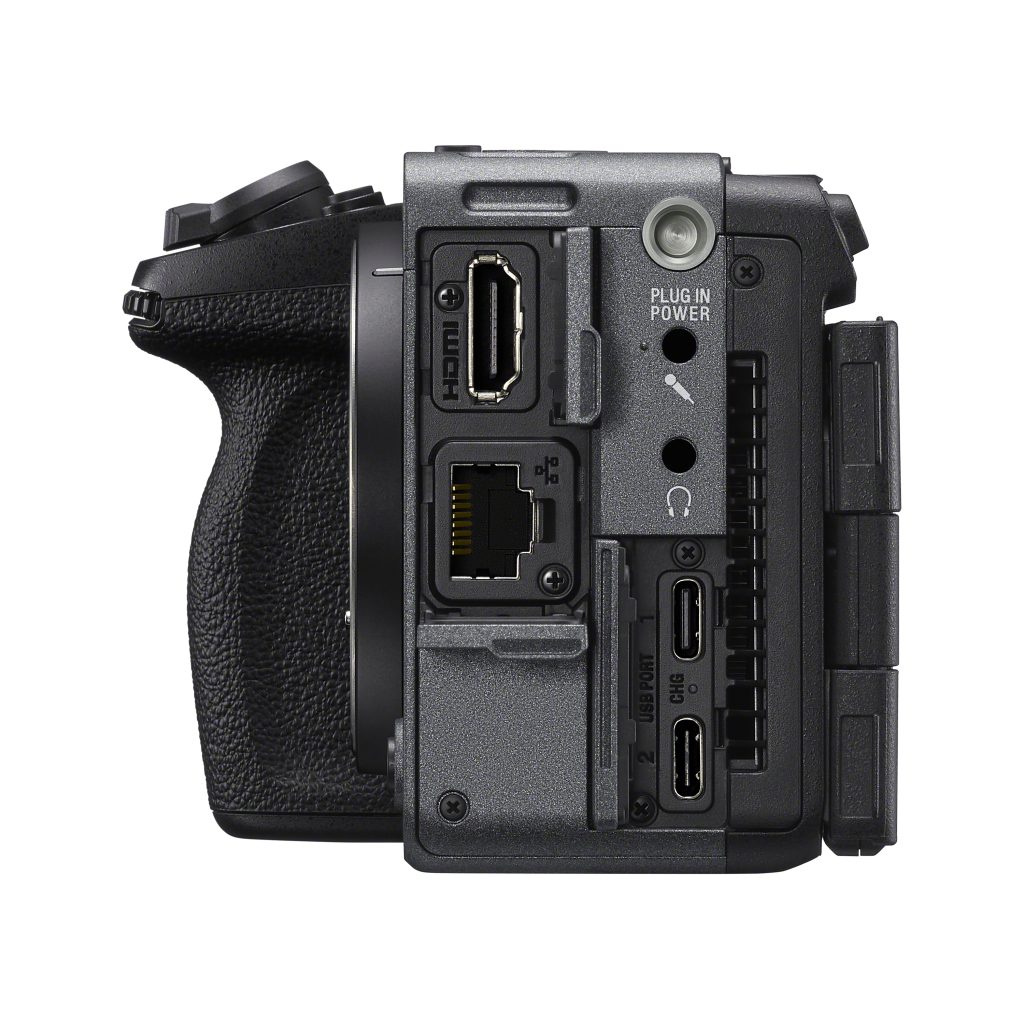
The FX5 has no external SSD recording port and no SDI output. Video output is limited to a single HDMI Type A port and an Ethernet/LAN port. For productions that require SDI for live broadcast or external recording, the FX5 is not the right tool. The FX6 and FX9 remain the options for those workflows.
These omissions are not oversights. They are product segmentation decisions that protect Sony’s higher-end cameras while giving the FX5 a clear identity as a compact cinema camera for indie filmmakers, content creators, and documentary shooters.
AI Autofocus and White Balance
The BIONZ XR2 processor includes an integrated AI processing unit, the same architecture found in the Sony A7R VI. The AI unit handles subject recognition, subject tracking, and auto tracing white balance. The autofocus system recognizes humans, animals, birds, insects, cars, trains, and airplanes, and tracks them across the frame with real-time eye detection.
The auto tracing white balance feature is new for Sony’s Cinema Line. It continuously adjusts white balance as lighting conditions change, such as when moving from daylight to tungsten interior lighting. For documentary and event shooters, this reduces the need for manual white balance adjustments during fast-moving productions. For narrative filmmakers who prefer locked white balance for consistency, the feature can be disabled.
The AI unit also reduces rolling shutter through predictive readout timing. While the stacked sensor already minimizes rolling shutter, the AI processing further corrects residual distortion during fast pans and whip movements.
Connectivity and Streaming
The FX5 includes tri-band Wi-Fi supporting 2.4 GHz, 5 GHz, and 6 GHz frequencies. It supports Sony’s Monitor and Control app for wireless smartphone monitoring and camera control. The Ethernet/LAN port allows integration into IP-based production environments, making the FX5 suitable for multi-camera live productions and remote workflows.
The camera also supports streaming directly to platforms without an external encoder. For solo content creators who need to livestream, the FX5 can push a 1080p feed directly to YouTube, Twitch, or custom RTMP endpoints.
Battery and Power
The FX5 uses a new NP-SA100 battery that Sony claims can record up to 130 minutes of 4K 60p video. That is approximately 17 minutes longer than the NP-FZ100 battery used in the FX3A. The NP-SA100 offers 1.3 times the capacity of the FZ100 and supports fast charging. The camera can also be powered or charged through the USB-C port, allowing continuous recording from AC power or a USB power bank.
The new battery is necessary because the FX5’s stacked sensor, BIONZ XR2 processor, larger display, and enhanced cooling system draw more power than the FX3’s components. Users who own existing FZ100 batteries will need to purchase NP-SA100 batteries for the FX5, though Sony may offer a battery grip that accepts FZ100 cells.
How It Compares to Canon and Nikon
Canon spent 2025 developing three cameras aimed at FX3 users: the EOS R6V, EOS R6 Mark III, and EOS C50. The C50 is the most direct competitor to the FX5. It costs $3,699, $1,199 less than the FX5. It offers 7K open gate, a 32.5MP sensor, and Dual Pixel CMOS AF II. But the C50’s RAW recording tops out at 12-bit Cinema RAW Light, compared to the FX5’s 16-bit X-OCN. The C50 also lacks triple base ISO, offering only dual base at 800 and 3200.
The Nikon ZR, developed in collaboration with RED Digital Cinema after Nikon’s acquisition of RED, launched at $2,197. It records 6K RAW in RED’s R3D NE format, with dual base ISO at 800 and 6400, and 15-plus stops of dynamic range. At $2,197, the ZR is not a direct competitor to the FX5. It targets entry-level filmmakers and content creators who want RED color science at an affordable price. The FX5 targets mid-level professionals who need the workflow integration and feature set of Sony’s Cinema Line.
The comparison that matters most is the Canon EOS C50 versus the Sony FX5. Both are compact full-frame cinema cameras in the same form factor category. The C50 is cheaper and offers higher-resolution open gate. The FX5 is more expensive but offers 16-bit RAW, triple base ISO, and a stacked sensor with faster readout. For productions that deliver to streaming platforms in 4K, the difference between 7K and 5K open gate is irrelevant. The difference between 12-bit and 16-bit RAW, and between dual and triple base ISO, is meaningful.
Firmware Roadmap
Sony has announced a Firmware 2.0 update scheduled for August 2027. The update will add four features. 4K 240p X-OCN recording will extend the camera’s high-speed capabilities. Open Gate 3:2 recording in XAVC-I will bring open gate to the more storage-efficient codec. Optimized user interface for vertical shooting will streamline workflows for social media content. Frame Grab for still-image extraction will allow users to pull high-resolution stills from video files, a feature the FX3 lacked.
The firmware roadmap suggests Sony views the FX5 as a long-term platform rather than a one-year product. The company typically supports Cinema Line cameras with firmware updates for three to four years after launch.
Pricing and Availability
The Sony FX5 costs $4,898 for the body only. The XLR handle kit costs $5,498. The optional EVF costs approximately $799. Pre-orders opened today at B&H Photo, Adorama, Amazon, and major European retailers including WexUK and Calumet. Shipping begins on August 18, 2026.
The price positions the FX5 above the Canon C50 ($3,699) and well above the Nikon ZR ($2,197). It is also $1,100 cheaper than the FX6 ($5,998), which remains in Sony’s lineup with its built-in ND filters, SDI output, and larger body. For users who need those features, the FX6 is still the better choice. For users who prioritize compact size, internal RAW, and triple base ISO, the FX5 is the new standard.
Bottom Line
The Sony FX5 is the most significant compact cinema camera Sony has released since the FX3 in 2021. It brings three features, open gate, triple base ISO, and internal 16-bit X-OCN RAW, that were previously unavailable below $10,000. The 16.6MP stacked sensor, BIONZ XR2 processor, and Venice-style menus make it a genuine cinema tool rather than a hybrid camera with video features.
The omissions are deliberate. No internal ND, no photo mode, no SDI output, and no built-in EVF keep the price at $4,898 while protecting Sony’s higher-end cameras. For indie filmmakers, documentary shooters, and content creators who need professional image quality in a compact body, the FX5 is the new benchmark.
For existing FX3 owners, the upgrade decision depends on workflow. If you need open gate, triple base ISO, or 16-bit RAW, the FX5 is a clear jump. If you shoot primarily in XAVC and do not push the camera to its limits, the FX3 remains capable. For new buyers, the FX5 is the obvious choice over the FX3, which Sony will likely discontinue or reprice once FX5 inventory stabilizes.
Sources and further reading
- Sony Official: Product announcement, July 22, 2026. All specifications confirmed by Sony’s press release and product page.
- NewsShooter: Full specification breakdown and technical analysis of X-OCN recording formats, sensor architecture, and Dual Gain mode. Confidence level: CONFIRMED.
- Petapixel: Triple base ISO details and comparison with Canon’s implementation. Confidence level: CONFIRMED.
- B&H Photo: Official retailer specifications, pricing, and availability. Confidence level: CONFIRMED.
- SonyAlphaRumors: Pre-announcement leaks including body dimensions, weight, battery type, and EVF pricing. All leaks confirmed by official announcement. Confidence level: CONFIRMED.
- Digital Camera World: Competitive analysis comparing FX5 to Canon C50 and Nikon ZR. Confidence level: CONFIRMED.
- TechTimes: Pre-announcement summary of expected features. Confidence level: CONFIRMED.
About This Article
This article was compiled on July 22, 2026, the day of Sony’s official FX5 announcement. All specifications are drawn from Sony’s official press materials, confirmed retailer listings, and verified technical publications. No speculative claims are included. Pricing and availability are subject to regional variation.
OFOKI TECH | Compiled July 22, 2026 | Sony FX5 officially announced today