Leaked Firmware Reveals What the Canceled ASUS ROG Phone 10 Could Have Been
By OFOKI TECH | August 11, 2026
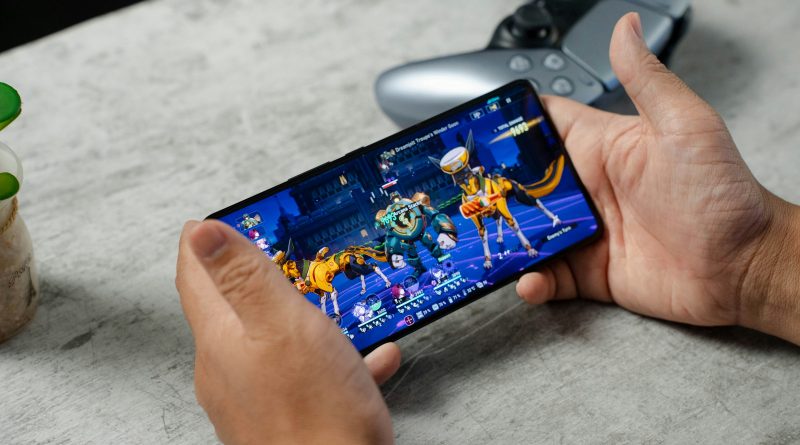
In January 2026, ASUS chairman Jonney Shih confirmed what industry observers had suspected for months: the company would not launch any new smartphones in 2026. The announcement marked the end of ASUS’s mobile business, at least for the immediate future, and it killed two product lines that had been in active development. Among the casualties was the ROG Phone 10 series, codenamed Boston, which a firmware leak has now revealed in detail. The leak offers a look at what ASUS intended to build before it pivoted to AI hardware and smart glasses.
The Cancellation
ASUS’s exit from the smartphone market was not a sudden decision. The company had been struggling in mobile for years. In 2018, ASUS recorded a one-time charge of more than NT$62 billion related to handset operations and subsequently narrowed its focus to premium ZenFone models and the gaming-oriented ROG Phone series. DigiTimes reported in early January 2026 that ASUS would pause new smartphone launches, and chairman Jonney Shih confirmed the move on January 16, stating that ASUS would no longer add new mobile phone models. Shih said ASUS would continue to support existing users with software updates and warranty assistance, and alluded to the possibility of a future return, but did not confirm it.
The company has since redirected its smartphone R&D teams toward AI projects, including smart glasses and robotics. At CES 2026, ASUS unveiled the ROG XReal R1, a pair of gaming smart glasses developed in partnership with XReal, featuring a 240Hz refresh rate and built-in head tracking.
The Firmware Leak
In July 2026, NotebookCheck published a detailed analysis of firmware files from an engineering prototype of the ROG Phone 10 and ROG Phone 10 Pro. The devices shared the internal model number AI2601 and the codename Boston. The leak was later corroborated by Android Authority, which reviewed the same files.
Both models were being tested with Qualcomm’s Snapdragon 8 Elite Gen 5, alongside sub-6 GHz 5G connectivity, UFS 4.0 storage, and LPDDR5X memory. Wi-Fi was handled by Qualcomm’s WCN7750 paired with a Kiwi v2 front-end module, enabling Wi-Fi 7. The RAM and storage capacities were not specified in the firmware, but based on the ROG Phone 9 Pro’s configurations of 16GB/512GB and 24GB/1TB, similar tiers were likely planned.
Camera Configurations
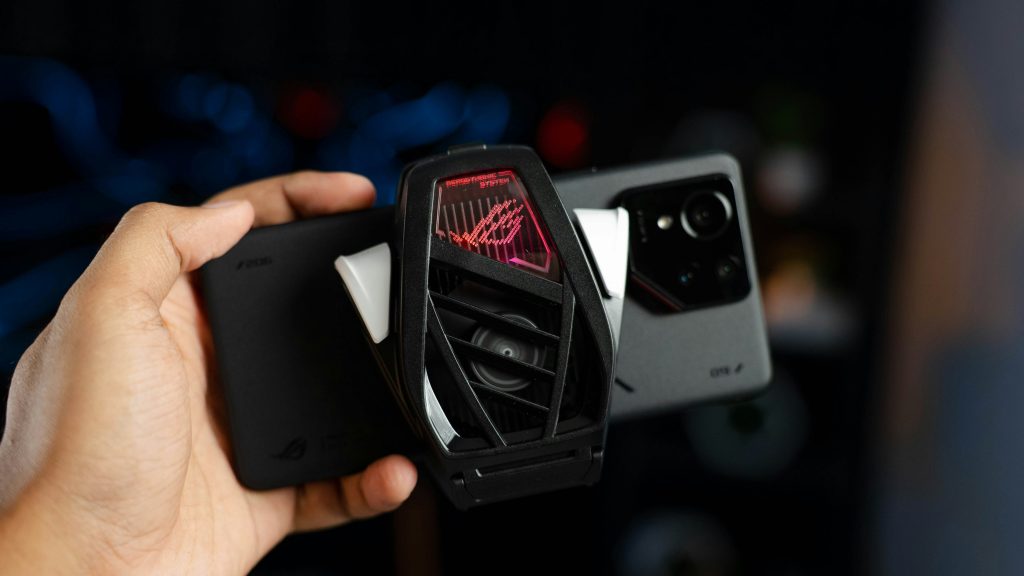
The leak reveals two distinct camera setups. The ROG Phone 10 Pro was the more ambitious of the two. Its main camera used a 50MP OV50Q sensor with a 1/1.3″ optical format, the same OmniVision part used in the standard Xiaomi 17. The ultrawide was a 13MP OV13B10. The telephoto used a 32MP Samsung ISOCELL JD1 module capable of 3x zoom. The front-facing camera was a 32MP OV32C.
The base ROG Phone 10 was more conservative. Its main sensor was a 50MP IMX766, a Sony part that has appeared in numerous flagship devices. The ultrawide was the same 13MP OV13B10 as the Pro, but the telephoto was absent, replaced by a 5MP GC05A2 macro camera. The selfie camera was identical to the Pro variant: 32MP OV32C.
The camera configuration files found in the firmware dump include Qualcomm camera sensor module binaries, confirming these were not placeholder specs but active development targets.
What the ROG Phone 10 Represented
The ROG Phone 10 would have been ASUS’s tenth-generation gaming phone, a milestone that now will not be reached. The series had carved out a niche in the gaming phone market, competing primarily with Nubia’s RedMagic brand. With ASUS stepping back, RedMagic may be left as the only major player in the dedicated gaming phone segment, a shift that could reduce competition and increase prices.
The cancellation also ends ASUS’s ZenFone line, which had once gained traction in Southeast Asia by appealing to price-conscious consumers with stock Android. The company’s failure to maintain a foothold in the budget and midrange segments, particularly in markets like India where ASUS was one of the few options with a clean Android experience, is cited by observers as a key factor in its eventual exit.
ASUS has not ruled out a return to smartphones. Chairman Shih’s statement left the door open, and the company continues to maintain its mobile operations infrastructure for software updates and warranty support. For now, the ROG Phone 10 exists only in a firmware dump, a record of what was planned before the pivot to AI.
Sources and further reading
- NotebookCheck: Exclusive leaked firmware reveals specs of canceled ROG Phone 10 series
- Android Authority: Leak reveals what the ASUS ROG Phone 10 series could have been
- PCMag: Asus confirms it won’t launch phones in 2026, may leave Android altogether
- DigiTimes: Asus to pause new smartphone launches in 2026
- PCMag: ROG XReal R1 smart glasses at CES 2026
- GSMarena: Confirmed: Asus is exiting the smartphone market