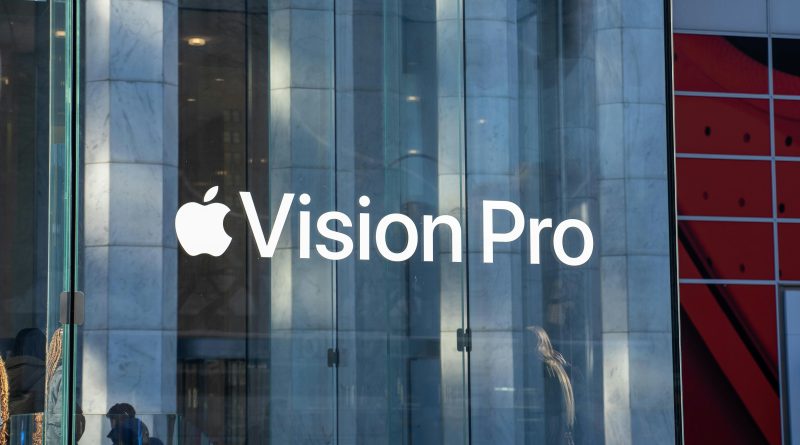
Apple Puts Vision Pro Successor on Ice Until 2028 or 2029, Shifts Focus to Smart Glasses
By OFOKI TECH | August 11, 2026
Apple’s next-generation Vision Pro headset is not coming soon. According to multiple reports from Bloomberg’s Mark Gurman and supply chain analyst Ming-Chi Kuo, Apple has paused development of a lighter, cheaper successor to the $3,499 spatial computing headset, with the earliest possible launch now pushed to late 2028 or 2029. In the meantime, the company has redirected the bulk of its mixed-reality engineering teams toward a pair of AI-powered smart glasses, codenamed N50, aimed at a late 2027 release.
The Vision Pro’s Commercial Struggle
The decision to delay the headset follows two years of weak sales. Apple does not disclose Vision Pro unit sales, but third-party estimates paint a clear picture. IDC claimed that just 45,000 new units of Vision Pro were expected to sell in the 2025 holiday quarter, which included the launch of the M5 refresh. That figure, if accurate, represents a collapse from the roughly 500,000 units analysts estimate were sold in the product’s 2024 launch year. Sensor Tower data cited by the Financial Times indicates Apple has reduced its Vision Pro digital marketing spend by over 95% in the US and UK. Counterpoint Research reported that the overall VR headset market declined 14% in 2025.
Apple did refresh the Vision Pro in October 2025 with an M5 chip, but the update changed nothing about the device’s size, weight, or $3,499 price. Gurman described it as a hardware maintenance move, not a rethink of the form factor.
From Vision Air to On Ice
Apple’s original plan, according to Gurman and Kuo, was to follow the Vision Pro with a cheaper, lighter variant. The device carried internal codenames including N100 and Vision Air, and was initially targeted for late 2025 or 2026. By late 2024, Kuo had pushed his estimate to beyond 2027. In October 2025, Gurman reported that Apple had paused the project to prioritize smart glasses.
In a May 2026 newsletter, Gurman clarified that a new Vision Pro, cheaper and lighter than the current model, is in active development but not expected until late 2028 or 2029. He described the headset category as « on ice » until both weight and cost conditions are met. The three-year slide from « late 2025 » to « late 2028 or 2029 » reflects unresolved engineering challenges rather than a calendar decision. Apple needs a slimmer design and a lower price point before it can return to the headset category, and neither problem has an obvious shortcut.
The resource reallocation is concrete. Gurman reported that the bulk of Apple’s mixed-reality hardware talent has been pulled onto other projects, specifically lightweight smart glasses. MacRumors claimed in April 2026 that Apple had « given up » on Vision Pro entirely and disbanded the visionOS team after the M5 refresh saw poor sales. Kuo added that incoming CEO John Ternus, set to succeed Tim Cook on September 1, 2026, had taken Vision headsets off the roadmap entirely. UploadVR, citing a source with knowledge of Apple’s work, disputed the claim that the headset line was canceled forever, but confirmed the deprioritization.
The N50 Smart Glasses Project
What Apple is building instead is a pair of smart glasses that skip a display entirely. The N50 project, as reported by Gurman, pairs with an iPhone rather than running standalone. The device relies on cameras and voice interaction, positioning it as a direct competitor to Meta’s Ray-Ban smart glasses. The glasses are expected to include cameras, microphones, and speakers, powered by a new Apple-designed chipset based on the efficient S-series chips used in Apple Watch.
Gurman has described the glasses as lacking a display, with features including phone calls, music playback, live translations, turn-by-turn directions, and multimodal AI. To distinguish from Meta’s offering, Apple plans to use « high-end materials » and two oval-shaped cameras: one for high-quality image and video capture, and the other for computer vision. The product would come in at least two sizes and four different designs, including two rounded frames and two square models.
The timeline has slipped here too. Gurman initially reported the glasses were on track for a 2026 reveal and early 2027 release. In late July 2026, he pushed that back to late 2027, because the core functionality depends on Siri AI and Visual Intelligence, and Apple wants to ensure both are in a highly reliable state at launch. Apple delayed Siri after the assistant failed to meet expectations for promised Apple Intelligence features in iOS 18.
A Second Glasses Product with Display
Apple is reportedly working on a second smart glasses product that does include a display. This version, described by Gurman as a competitor to the Meta Ray-Ban Display, was originally planned for 2028 but Apple is now looking to accelerate development. Ming-Chi Kuo has reported that Apple plans to launch smart glasses with a binocular in-lens heads-up display in 2029. Gurman, meanwhile, has suggested that true augmented reality glasses are not coming from Apple this decade.
What This Means for visionOS Developers
For developers currently building on visionOS, the implications are practical. The platform will continue running on the M5 hardware released in October 2025, with no new headset hardware to target for at least two to three years. That is a long runway on a single spec, and it shapes what kinds of applications are worth building versus which ones benefit from waiting for new capabilities. The current Vision Pro is likely to remain a premium, niche device for the foreseeable future.
Sources and further reading
- Bloomberg / Mark Gurman on X: Vision Pro successor timeline
- TweakTown: Apple will delay next Vision Pro headset release by years
- 9to5Mac: M5 Vision Pro launch likely made minimal sales impact
- Mashable: Apple Vision Pro slashes production after weak sales
- UploadVR: No, Apple Didn’t Cancel The Vision Headset Line Forever
- 5thScape: Apple Shifts Strategy: Smart Glasses Over Vision Pro
- MacRumors Forums: Apple stops work on lighter Vision Pro to fast-track AI smart glasses
- Memeburn: Apple Vision Air release delayed to 2029